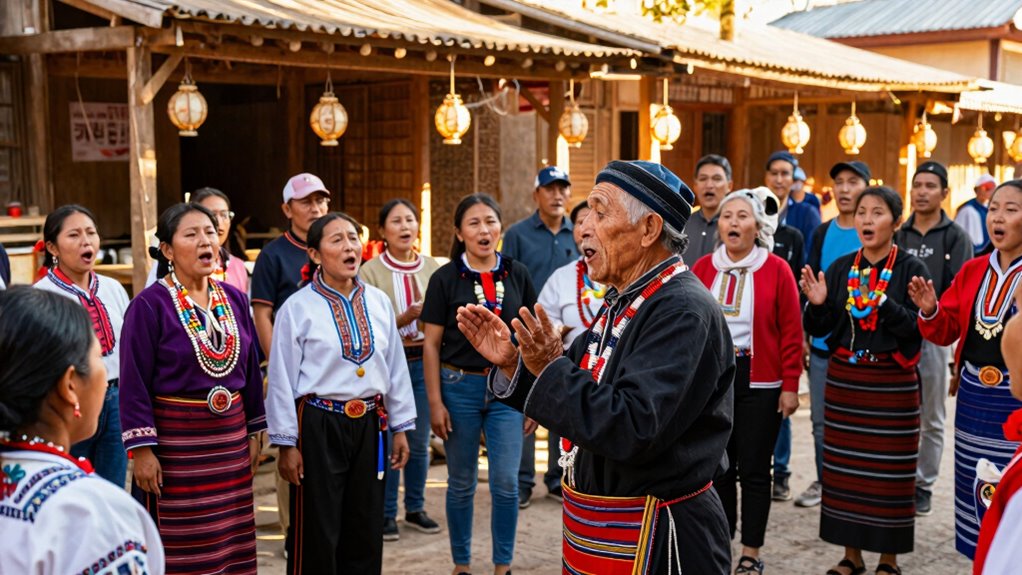

Your local dialect profoundly shapes chants by influencing their rhythm, tone, and emotional depth, making each performance unique to your community. It carries local words, idioms, and pronunciation nuances that evoke strong feelings and a sense of belonging. These dialect elements help preserve your culture’s stories, beliefs, and identity over generations. If you keep exploring, you’ll discover how these linguistic traits make chants powerful symbols of community resilience and cultural pride.
Key Takeaways
- Local dialect influences the rhythm, tone, and emotional depth of chants through unique pronunciations and expressions.
- Dialects embed regional words and symbols, making chants culturally specific and meaningful.
- The use of dialect preserves linguistic nuances, strengthening community identity and cultural resilience.
- Dialects shape the musicality and overall feel of chants, fostering a sense of belonging and pride.
- Incorporating regional language in chants helps pass down stories, customs, and traditions across generations.
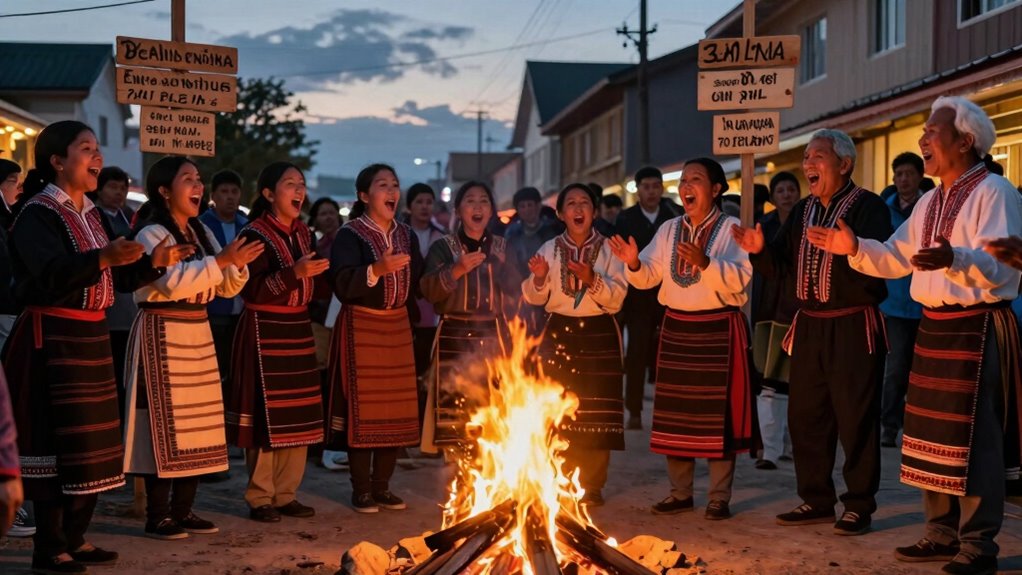
Have you ever noticed how local dialects and chants bring a community’s culture to life? When you hear a chant that’s infused with the unique sounds and words of a region, it’s more than just noise—it’s a reflection of shared history, values, and identity. These chants often serve as a powerful tool for cultural significance, connecting generations and reinforcing a community’s traditions. They act as a living record to the community’s past, ensuring that stories, beliefs, and customs aren’t lost over time. By embracing local dialects in chants, you’re participating in a tradition that preserves the uniqueness of your culture, making sure it remains vibrant and relevant.
The way a chant is shaped by local dialects directly influences its rhythm, tone, and overall feel. Dialects carry nuances—specific pronunciations, idioms, and expressions—that give chants their distinct flavor. When you speak or sing in your community’s dialect, it’s easier to evoke emotions and create a sense of belonging. These linguistic nuances aren’t just aesthetic; they’re essential for language preservation and help keep cultural practices alive. As communities evolve, language can sometimes fade or be replaced, but chants rooted in dialects help keep the language alive, embedded within cultural practices. They’re a form of resistance against cultural erosion, ensuring that the dialect remains a living, breathing part of daily life. Additionally, the unique phonetic qualities of dialects enrich the musicality and emotional depth of chants, making them more impactful.
You might notice that chants often include words or phrases unique to your region—terms that hold particular meaning or historical significance. These elements aren’t accidental; they’re carefully woven into the fabric of the chant, reinforcing cultural identity. When you participate in or listen to these chants, you’re not only engaging with a musical or rhythmic tradition but also reaffirming your connection to your community’s language and heritage. The way local dialects influence chants makes them more than just words—they become symbols of collective memory, pride, and resilience.
In essence, the shaping of chants by local dialects underscores their role in cultural preservation. It’s through these vocal expressions that communities maintain their language, pass down stories, and celebrate their uniqueness. When you understand how dialects influence chants, you realize you’re part of a larger effort to keep your cultural identity alive. These chants are more than performances—they’re living expressions of your community’s soul, ensuring that the language and traditions you cherish continue to thrive for generations to come.

PQRQP 3 in 1 Professional Wireless Lavalier Microphone for iPhone/Android/Camera, Wireless Microphones, Mini Microphone, Crystal Clear Sound Quality for Recording, Live Streaming, Clips-Elegant Black
- Universal Receiver Compatibility: Compatible with smartphones, cameras, laptops
- Wireless Range: Stable 65-foot wireless transmission
- Hands-Free Recording: Clips onto clothing for mobility
As an affiliate, we earn on qualifying purchases.
As an affiliate, we earn on qualifying purchases.
Frequently Asked Questions
How Does Dialect Influence Chant Melody and Rhythm?
You notice that dialect influences chant melody and rhythm through distinct intonation patterns and syllable emphasis. These elements shape the way you sing or chant, making it uniquely local. The melody often follows the natural rise and fall of your dialect’s intonation, while the rhythm aligns with syllable emphasis, giving the chant its authentic sound. This personal and cultural connection strengthens the chant’s meaning and emotional impact.
Are Certain Dialects More Suited for Specific Chant Styles?
Think of dialects as colorful threads woven into a rich tapestry; some stand out more in certain patterns. Dialect diversity influences chant styles by aligning rhythms and melodies with cultural identity. Certain dialects, with their unique intonations and sounds, naturally suit specific chant styles, making the performance more authentic and resonant. Embracing these differences helps preserve cultural heritage and deepens the emotional connection in your chants.
How Do Non-Native Speakers Interpret Dialect-Based Chants?
You might find that non-native speakers interpret dialect-based chants with curiosity and sometimes confusion, as cultural identity and language diversity influence their understanding. They may struggle with pronunciation or miss subtle nuances, but their efforts often show respect for local traditions. Exposure helps them appreciate the rich cultural context, fostering a deeper connection. Ultimately, embracing language diversity enhances their experience and broadens their perspective on the community’s unique expressions.
Can Dialect Variation Lead to Misinterpretation of Chants?
Yes, dialect variation can lead to misinterpretation of chants because regional pronunciation and cultural nuances influence how words are heard and understood. When you encounter chants with strong dialect features, you might miss subtle meanings or misjudge emotional tones. These differences can cause confusion, especially for non-native speakers, emphasizing the importance of understanding local context. Recognizing regional pronunciation and cultural nuances helps you appreciate the chant’s true significance.
How Does Dialect Preservation Impact Chant Tradition Continuity?
You see, dialect preservation plays a crucial role in maintaining chant tradition continuity. By embracing dialect diversity, you guarantee that unique linguistic expressions stay alive, fostering a strong cultural identity. When you preserve local dialects in chants, you connect generations and reinforce community bonds. This ongoing practice keeps the tradition vibrant, authentic, and true to its roots, allowing future generations to appreciate and carry forward their cultural heritage seamlessly.
Conclusion
Remember, as the saying goes, “A language is the lens through which we see the world.” Your local dialect isn’t just words; it’s the heartbeat of your community, shaping chants that echo your culture and identity. When you embrace your dialect, you preserve your unique voice and pass it on through powerful chants. So, never underestimate the strength of your words—they carry the soul of your people, uniting and inspiring across generations.