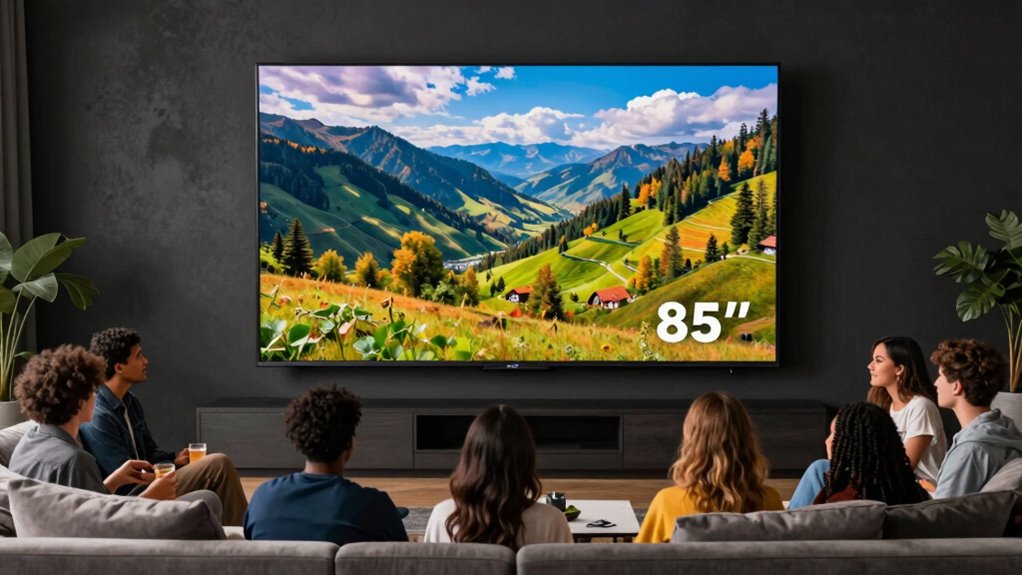

An 85-inch screen comfortably serves about 4 to 6 people in a typical living room, depending on seating layout and viewing distance. Sitting too close can make pixels visible, while sitting farther back ensures everyone can see clearly. Larger spaces with proper arrangement can accommodate more viewers. To get the most out of your setup and understand how to optimize your viewing experience, keep exploring these important factors.
Listen free for 30 days with Audible
Thousands of audiobooks and originals — cancel anytime.
As an affiliate, we earn on qualifying purchases.
Key Takeaways
- An 85-inch screen comfortably serves 4 to 6 people in a typical living room setup.
- Seating capacity depends on viewing distance; 10-14 feet is ideal for clear image perception.
- Larger rooms or arrangements can accommodate 10+ viewers with proper seating.
- Visual acuity and lighting conditions influence how many people can see the screen clearly.
- Proper placement and seating layout maximize shared viewing without pixelation or discomfort.
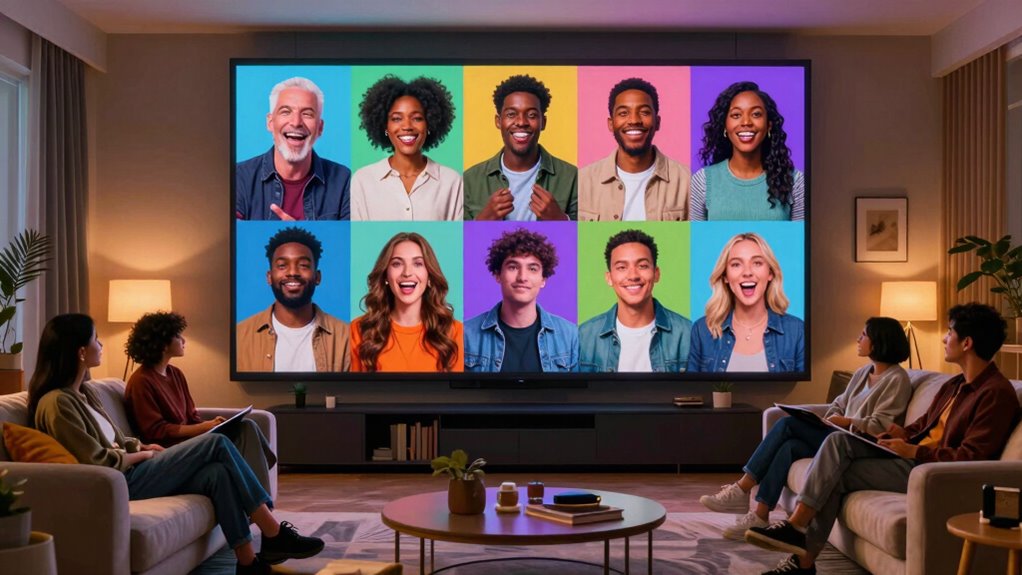
An 85-inch screen can comfortably serve a sizable group, but the exact number depends on how close viewers sit and what they’re watching. When considering how many people can enjoy the display at once, screen resolution plays a vital role. Higher resolutions, like 4K or even 8K, provide sharper images and more detail, allowing viewers to sit closer without noticing pixelation. If your screen has a lower resolution, viewers need to maintain a greater viewing distance to perceive a clear picture, which in turn limits how many people can comfortably watch simultaneously.
Higher resolutions like 4K or 8K let viewers sit closer without pixelation, fitting more people comfortably around an 85-inch screen.
Your viewing distance greatly influences how many people can gather around an 85-inch screen. If viewers sit too close, individual pixels become visible, and the picture may appear blurry or pixelated. Conversely, sitting farther back allows everyone to see the entire screen without strain. For a typical 85-inch display, the ideal viewing distance is roughly 10 to 14 feet for high-resolution content, ensuring everyone enjoys a clear picture. If your group is larger and people are spread out more, they’ll need to sit farther away to get a full view, but this can reduce the sense of shared experience.
As a rule of thumb, the number of viewers you can comfortably accommodate depends on the size of the space and how close they sit. In a living room or media room where seating is closer, about four to six people can comfortably watch without feeling cramped, especially if they’re seated at the recommended viewing distance for high-resolution content. If you’re hosting a viewing party in a larger space, you might fit ten or more people, but only if everyone is seated at a suitable distance where the image remains sharp. Keep in mind that the size of the room, the arrangement of seating, and the viewers’ visual acuity all factor into how well everyone can enjoy the experience. Additionally, viewing comfort is an important consideration, as fatigue or strain can diminish the shared experience over time. Proper seating arrangement can also enhance the overall viewing experience by ensuring everyone has a good line of sight and is comfortable during extended viewing. Furthermore, the visual acuity of each viewer influences how well they perceive details on the screen, especially at closer distances. Finally, considering the lighting conditions of the viewing environment can significantly impact visibility and overall enjoyment. Ultimately, your goal is to balance screen resolution and viewing distance to ensure everyone gets a good view. The bigger the screen, the more flexibility you have with seating, but only if each viewer can see the picture clearly. Properly considering these elements guarantees that your 85-inch screen becomes a centerpiece for shared entertainment, capable of serving a crowd without sacrificing picture quality.
As an affiliate, we earn on qualifying purchases.
Frequently Asked Questions
What Is the Ideal Viewing Distance for an 85-Inch Screen?
For an 85-inch screen, the ideal viewing distance is about 10 to 13 feet. This range guarantees ideal screen size and viewing comfort, allowing you to enjoy the full impact of the high-resolution display without straining your eyes or losing detail. Keep in mind, a larger screen like this benefits from a slightly increased distance to maximize immersion and minimize any discomfort during extended viewing sessions.
How Does Screen Resolution Affect Viewing Experience on Large Displays?
A picture is worth a thousand words, and on large screens, resolution plays an essential role. Higher resolution enhances pixel density, making images sharper and more detailed, while better color accuracy enriches your viewing experience. If your resolution is low, you’ll notice pixelation and dull colors, diminishing immersion. To truly enjoy your 85-inch screen, prioritize high resolution—it’s the key to vibrant visuals and crisp details.
Can an 85-Inch Screen Be Used Outdoors Effectively?
Yes, an 85-inch screen can be used outdoors effectively if it offers outdoor durability and weather resistance. Look for models designed with sealed enclosures, anti-glare screens, and weatherproof materials. These features protect against rain, dust, and sunlight, ensuring clear visuals and longevity. Proper installation in shaded areas also helps improve visibility. With the right outdoor-rated display, you can enjoy large-screen visibility in various weather conditions.
What Are the Cost Considerations for an 85-Inch TV?
An 85-inch TV can feel like a cinematic treasure chest, but it comes with a hefty price tag. Your cost analysis should include not just the purchase price, but also warranty coverage to safeguard your investment from unexpected storms. High-end models might demand a premium, yet they often provide better durability and features. Remember, investing prudently guarantees your giant screen remains a shining star in your entertainment galaxy.
How Do Ambient Lighting Conditions Impact Viewing on Large Screens?
Ambient lighting greatly impacts your viewing experience on a large screen like an 85-inch TV. Ambient glare from bright lights or windows can cause reflections, reducing picture clarity. To improve your experience, adjust your room lighting to minimize glare and allow your eyes to adapt to the light levels, enhancing contrast and color accuracy. Proper light adaptation ensures you enjoy vivid visuals without straining your eyes or missing details.
Conclusion
So, when you’re cramming everyone around that 85-inch behemoth, you might think it’s just a giant screen, but in reality, it’s a portal to a cinema-sized universe—capable of making a small crowd feel like a packed stadium or a tiny gathering feel like a blockbuster premiere. It’s not just a TV; it’s your personal entertainment empire, capable of turning any room into the hottest show on Earth. Prepare to be amazed!
Fall Picks
fall essentials
As an affiliate, we earn on qualifying purchases.