
E-sports fans tend to be younger, mostly males, and are highly digitally native, engaging through live streams, social media, and gaming communities. In contrast, traditional sports fans have a broader age range, a more balanced gender split, and often prefer watching games via TV or attending live events. These differences shape their loyalty, motivations, and purchasing habits. If you stay with us, you’ll uncover deeper insights into how these personas interact and influence each other.

Get sports gear delivered free — and shop member deals
- Fast, free delivery on millions of items
- Access to Prime Big Deal Days deals on October 6–7
- Prime Video, Amazon Music and more included
Key Takeaways
- E-sports fans are predominantly younger (18-34), digitally native, and highly engaged online, unlike the broader age and gender demographics of traditional sports fans.
- E-sports audiences prefer interactive digital platforms for engagement, while traditional sports fans often watch via TV or in-stadium experiences.
- Loyalty in e-sports is strengthened through online community participation, streaming, and social media, whereas traditional sports loyalty often ties to live attendance and TV viewership.
- Motivations for e-sports fans include gaming skill admiration and social connection, whereas traditional sports fans may prioritize live excitement and team loyalty.
- Brand interactions among e-sports fans focus on digital content, merchandise, and community engagement, contrasting with traditional sports’ emphasis on event attendance and broadcast sponsorships.
As an affiliate, we earn on qualifying purchases.
Demographic Differences Between E‑Sports and Traditional Sports Fans
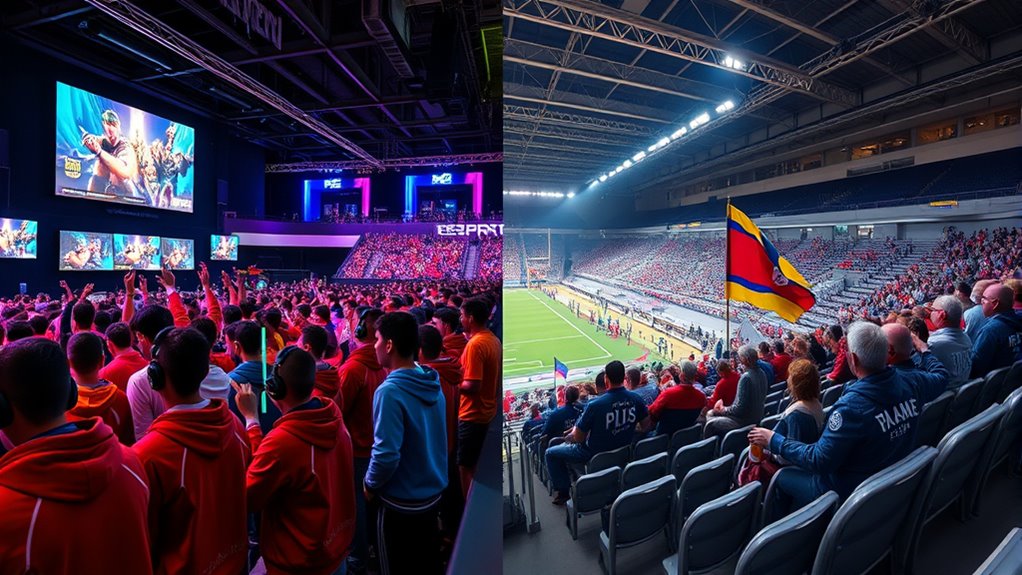
While both e-sports and traditional sports attract passionate fans, their demographics differ markedly. E-sports tend to draw a younger audience, with most fans falling between ages 18 and 34, whereas traditional sports appeal across a broader age range, including older viewers. Gender preferences also vary; e-sports have a higher male predominance, though female participation is growing rapidly. In contrast, traditional sports often have a more balanced gender split, depending on the sport. You’ll notice that e-sports fans are typically more digitally native, engaging through online platforms, while traditional sports fans may prefer attending games or watching on cable TV. These demographic differences influence marketing strategies and how each industry pitches their content to distinct audiences. Incorporating Cultural Intelligence strategies can help brands better understand and connect with these diverse fan groups.
Engagement Patterns and Media Consumption Habits
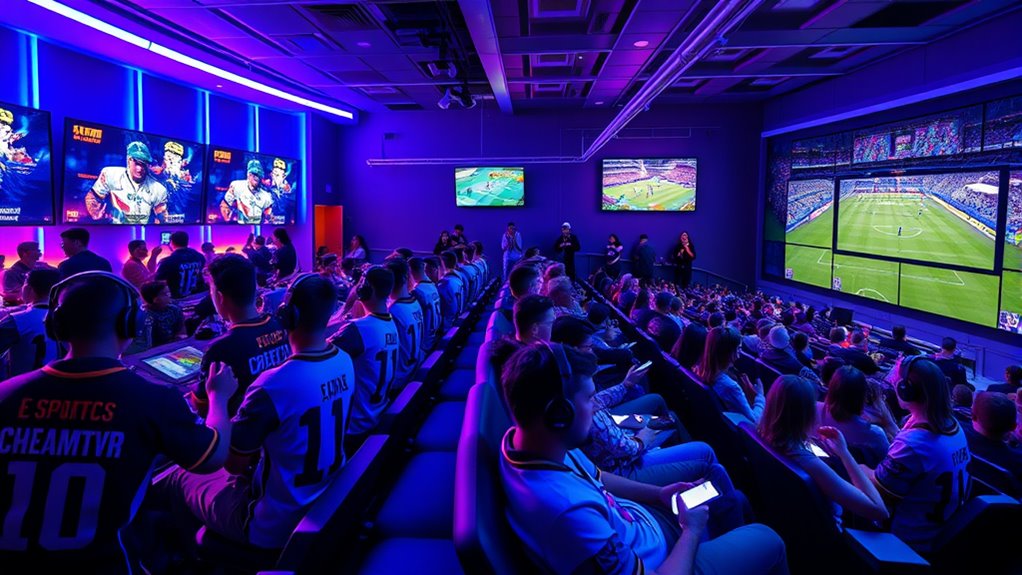
E-sports fans engage primarily through digital platforms, favoring live streams, social media, and gaming communities, which allows for real-time interaction and a highly immersive experience. You often consume content through interactive formats like chat chats during streams, polls, and gaming forums, boosting your engagement. Social media plays a key role, enabling quick updates, highlights, and direct communication with players and brands. This constant stream of content encourages frequent social media engagement, making you feel connected and informed. Unlike traditional sports, your media habits lean heavily on digital, interactive experiences that foster immediate feedback and participation. The highly interactive nature of e-sports content keeps you engaged longer and more actively, creating a dynamic relationship with the content you consume and the community you join.
Loyalty, Community, and Identity Factors
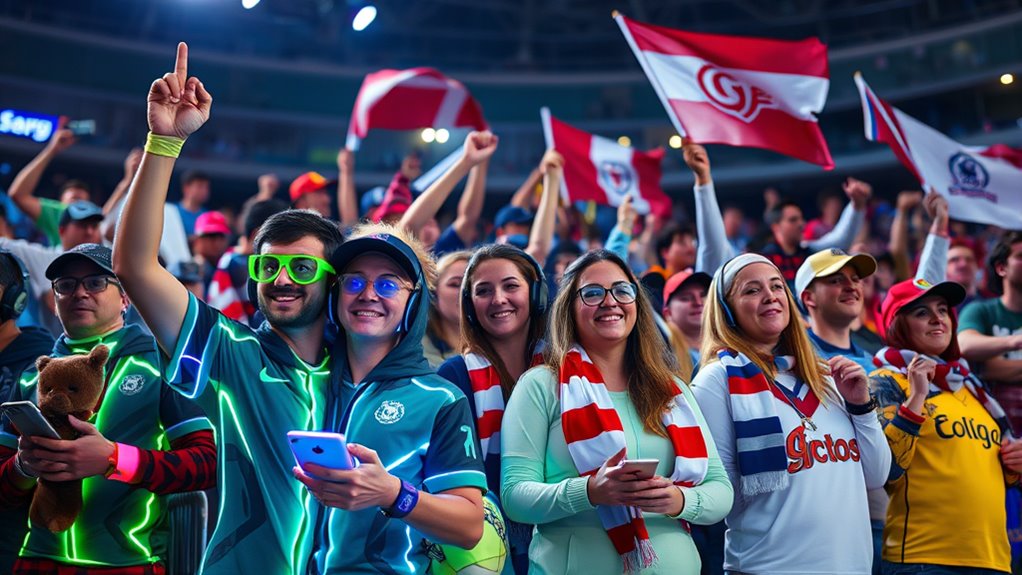
Your digital engagement fosters a strong sense of loyalty and community among e-sports fans. Unlike traditional sports, your active participation online deepens your connection to teams and players, fueling fan loyalty. Community engagement thrives through forums, social media, and streaming platforms, creating a shared space where fans celebrate victories, discuss strategies, and express their passion. This sense of belonging helps solidify your identity as part of a dedicated e-sports community. The immediacy and interactivity of digital platforms enable you to feel closer to the action and your fellow fans, strengthening your emotional attachment. Additionally, the emphasis on minimalist design in digital spaces encourages clearer communication and reduces distractions, enhancing your overall experience. Ultimately, these factors—fan loyalty and community engagement—transform your experience from mere spectatorship into a collective, identity-driven movement.
Motivations for Following and Participating

What drives fans to follow and participate in e-sports? Spectator motivations and participation drivers vary but often center on personal engagement and entertainment. You might be drawn to the thrill of competition, the skill of players, or the chance to connect with a like-minded community. E-sports offer a sense of achievement and social interaction that fuels your involvement. High refresh rates enhance the gaming experience, making matches more immersive and exciting. Here are some key motivators:
- Passion for gaming and skill appreciation
- Desire for social connection and community
- Excitement of live competition and adrenaline
- Interest in supporting favorite players or teams
These participation drivers keep you invested, making e-sports more than just watching—it’s about active engagement and shared experiences.
Purchasing Behaviors and Brand Interactions
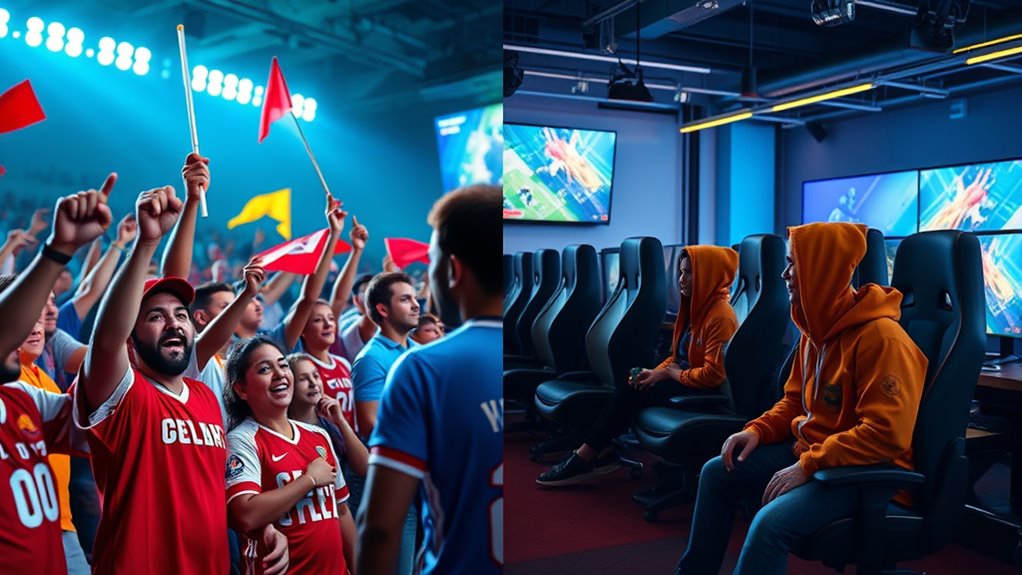
As a dedicated fan, your purchasing behaviors and brand interactions are driven by a desire to deepen your connection with the gaming community and enhance your experience. You tend to support brands that align with your sponsorship preferences, often engaging with companies that sponsor your favorite teams or events. Merchandise purchasing is a common way to show loyalty, whether it’s buying jerseys, accessories, or limited-edition items. You’re more likely to seek out exclusive or personalized products to feel closer to the e-sports scene. Additionally, you interact with brands through social media, sharing content, participating in campaigns, or attending events. This active engagement helps you feel part of a community that values authentic connections and shared passion for gaming. Recognizing the importance of genuine relationships, many fans also appreciate brands that demonstrate active listening and responsiveness to their community.
Frequently Asked Questions
How Do E‑Sports Fan Personas Evolve Over Time?
You see, fan personas evolve over time through increased fandom engagement and shifting viewer loyalty. As you follow e-sports, you might become more invested, developing deeper connections with players and teams. Your interests can grow, influenced by new game releases, community events, or streaming platforms. This ongoing engagement keeps your persona dynamic, making you more loyal and active within the e-sports scene, shaping your identity as a dedicated fan.
What Psychological Traits Distinguish E‑Sports Fans From Traditional Sports Fans?
You might think all sports fans share similar traits, but e-sports fans often show distinct psychological motivations like a desire for interactive engagement and community. Unlike traditional sports fans, who may prioritize loyalty patterns based on team history, e-sports enthusiasts thrive on digital connection and innovation. This emotional investment drives their loyalty, making their fan behavior more dynamic and adaptable, reflecting a modern, tech-savvy mindset that shapes their engagement.
How Do Cultural Differences Influence E‑Sports vs. Traditional Sports Fandoms?
Cultural differences shape how you engage with e-sports and traditional sports fandoms. You might participate in cultural rituals like viewing parties or online chats that strengthen your bond with the fan community. In some cultures, e-sports is embraced as a modern ritual, while traditional sports often emphasize communal gatherings. These cultural nuances influence your level of involvement, the rituals you follow, and how you connect within each fan community.
Like a digital mirror, social media shapes your online identity by amplifying your voice and connecting you with fellow fans. Through social media engagement, you share your passions, celebrate victories, and express loyalty, becoming part of a vibrant community. It’s a powerful tool that molds your perception of e‑sports, making your fandom more personal and dynamic, and ensuring your identity evolves with every post, comment, and shared moment.
How Do Gender Dynamics Differ Between E‑Sports and Traditional Sports Audiences?
You’ll notice gender dynamics in e-sports differ from traditional sports, especially in gender representation. E-sports often show more diverse participation and fan engagement across genders, fostering inclusive communities. However, stereotypes and gender biases still exist, impacting engagement levels. Traditional sports tend to have more established gender roles, sometimes limiting female participation. Understanding these differences helps you appreciate how gender influences fan identity and community in both domains.
Conclusion
Whether you’re a dedicated e-sports fan or a traditional sports enthusiast, understanding the differences in demographics, engagement, loyalty, motivations, and purchasing behaviors helps you connect more deeply. Recognize what drives your passion, embrace your community, and celebrate your unique identity. By appreciating these distinctions, you can enhance your experience, strengthen your involvement, and enjoy your favorite sport even more—because in this world of sports, your passion, your community, and your loyalty make all the difference.
NFL season / tailgating Picks
team gear
As an affiliate, we earn on qualifying purchases.