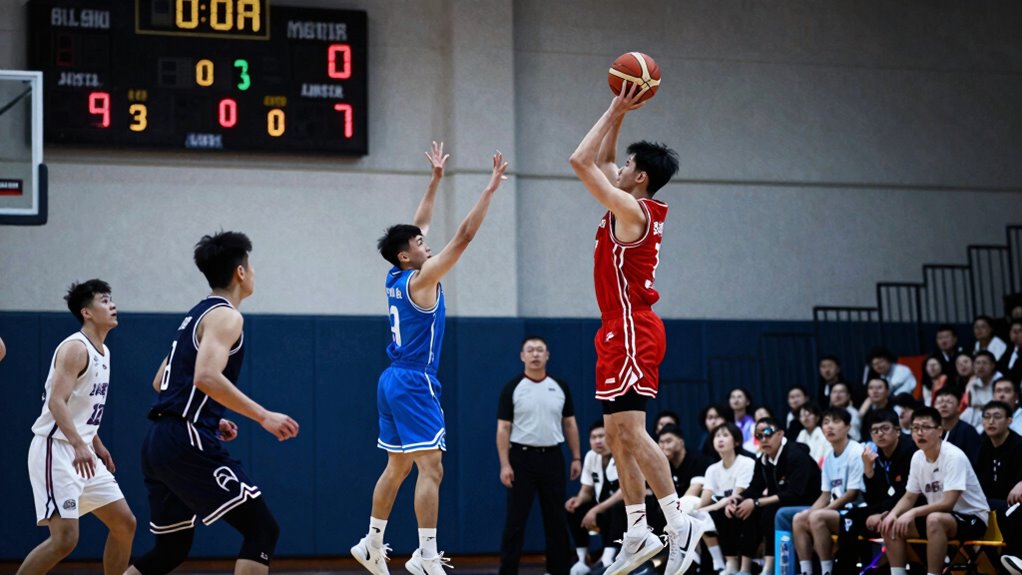

Scoreboard anxiety can cloud your judgment and increase your nerves during close games. When the pressure mounts, your heart may pound, hands tremble, and self-doubt creeps in, leading to careless mistakes. External noise from the crowd, combined with frustration and the fear of losing, makes it harder to focus on your skills. This cycle of anxiety and errors often costs teams essential wins. Keep exploring to discover how you can break free from this stress and perform your best.
Key Takeaways
- Scoreboard anxiety triggers physical symptoms like trembling and rapid heartbeat, impairing focus and decision-making during critical moments.
- External crowd noise and reactions heighten pressure, causing rushed plays and mistakes that can cost the game.
- Anxiety leads to overthinking and self-doubt, reducing confidence and increasing the likelihood of errors in tight situations.
- The cycle of mistakes and decreasing confidence intensifies emotional instability, making it harder to finish close games effectively.
- Lack of mental resilience allows external factors to distract players, undermining focus and strategic execution when it matters most.
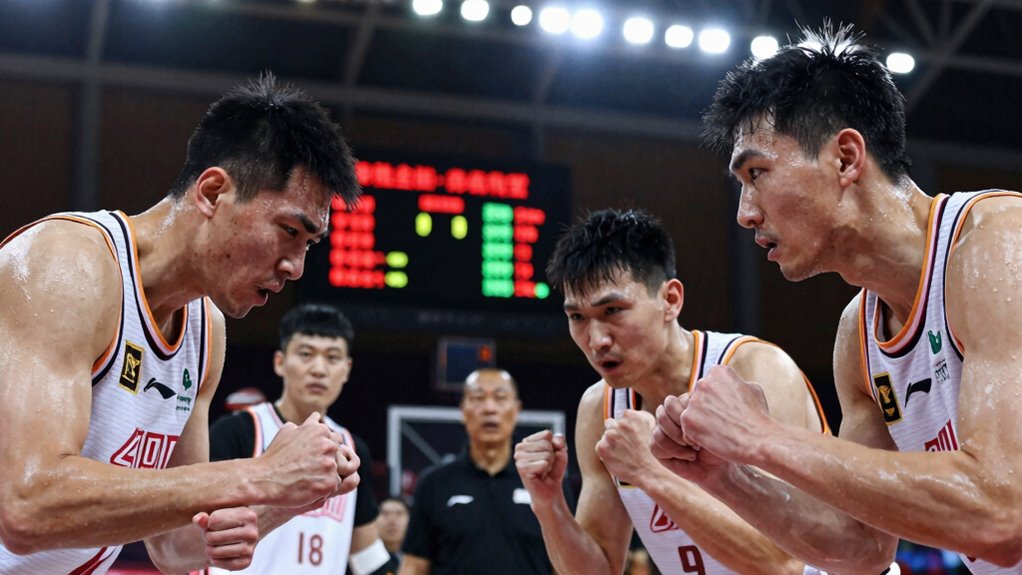
When the game comes down to the final moments, scoreboard anxiety can grip even the most seasoned players. You feel your heart pounding, your hands trembling slightly, and a rush of nerves takes over. It’s as if all the pressure in the world is concentrated on those last few seconds. This anxiety can shake your confidence, making you doubt every move you make. Instead of trusting your skills, you second-guess yourself, which can lead to mistakes at the worst possible time. It’s a mental battle that’s just as fierce as the physical one on the court or field. The stakes feel higher, and suddenly, your focus wavers. You start overthinking every decision, and that hesitation costs you precious opportunities.
Crowd influence plays a huge role in amplifying scoreboard anxiety. When the stands are packed with fans cheering wildly or booing loudly, it’s easy to get caught up in the noise. The energy from the crowd can feel overwhelming, especially if you’re already nervous. They cheer when you falter, and their pressure can make you more self-conscious. Conversely, if your team is trailing, the crowd’s frustration or anxiety might seep into your mindset, making it harder to stay calm and composed. The louder and more intense the crowd, the more it can magnify your sense of urgency and stress. You might find yourself rushing shots, making hasty passes, or trying to force plays just to silence the crowd or meet their expectations. All this external pressure pulls your focus away from what you need to do and onto external factors you can’t control. Recognizing and managing external influences is key to maintaining your composure.
This combination of dwindling player confidence and crowd influence creates a dangerous cycle. As your confidence dips, you’re more prone to mistakes, and those mistakes only reinforce your anxiety. The crowd’s reactions—whether positive or negative—can feed into your emotional state, making it tougher to stay steady. Developing mental resilience is essential for overcoming scoreboard anxiety and maintaining focus during critical moments. Building mental resilience involves mental training techniques that help you stay grounded and focused regardless of external circumstances. The ability to stay present and not let external pressures overwhelm you is fundamental in high-stakes situations. The key to overcoming scoreboard anxiety isn’t just about physical skill; it’s about mental resilience. You need to learn how to block out the noise, trust your training, and maintain confidence even when the scoreboard isn’t in your favor. When you can do that, you’ll find it easier to stay composed under pressure. But when anxiety takes hold, it’s easy for close games to slip away because your focus gets clouded, and your decision-making suffers.
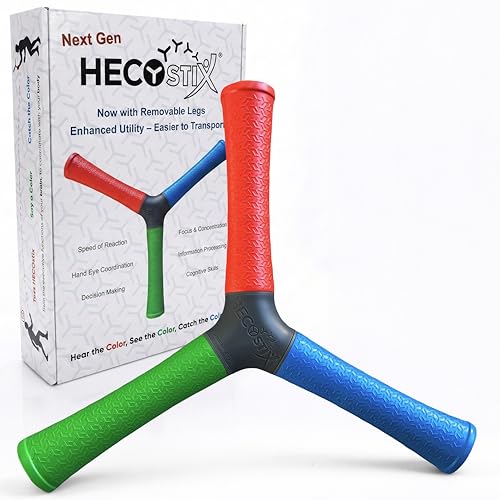
HECOstix Hand-Eye Coordination Trainer (Red/Green/Blue) – Reaction Time & Reflex Tool with Removable Legs | Improves Agility, Focus, & Multisensory Skills | Sports, Fitness, & Fun | All Ages
Portable Next-Gen Design: Innovative removable-leg system allows the trainer to disassemble in seconds for compact storage and easy…
As an affiliate, we earn on qualifying purchases.
As an affiliate, we earn on qualifying purchases.
Frequently Asked Questions
How Does Scoreboard Anxiety Develop During a Game?
Scoreboard anxiety develops during a game as your score perception shifts, making you hyper-aware of the score’s impact on your performance. As the game progresses, pressure buildup intensifies, causing you to focus more on the scoreboard rather than your skills. This heightened awareness can lead to increased stress and mistakes, ultimately impairing your ability to perform well. Recognizing this pattern helps you stay focused and manage your anxiety effectively.
Can Scoreboard Anxiety Be Trained or Reduced Over Time?
Yes, scoreboard anxiety can be trained and reduced over time. Studies show athletes with stronger mental resilience perform better under pressure. You can improve emotional regulation through mindfulness and visualization techniques, which help manage stress during high-stakes moments. Consistent practice builds confidence, enabling you to stay focused and calm. Over time, these skills diminish anxiety, allowing you to perform your best even in close games.
Does Scoreboard Anxiety Affect Players Differently Based on Experience?
Scoreboard anxiety affects players differently based on experience, as those with less experience often feel more performance pressure, leading to decreased confidence levels. You might notice newer players get overwhelmed and perform poorly under pressure, while seasoned players manage anxiety better due to familiarity with close game situations. Over time, experienced players learn to stay focused on their skills rather than the scoreboard, reducing the negative impact of anxiety on their performance.
How Do Coaches Manage Players’ Scoreboard Anxiety?
You can manage players’ scoreboard anxiety by focusing on their player mindset through effective coaching techniques. Encourage them to stay present and avoid fixating on the score by emphasizing effort, teamwork, and process over outcome. Use positive reinforcement, maintain calm communication, and set realistic goals. These strategies help players stay confident, reduce pressure, and perform their best, even in high-stakes close games.
Are There Specific Strategies to Stay Calm During Close Games?
Imagine you’re standing in the eye of the storm, calm amid chaos. To stay that way during a close game, focus on your mental resilience by practicing breathing exercises—deep inhales and slow exhales help anchor you. Visualize a calming scene, like a peaceful lake, to steady your nerves. These techniques quiet your mind, allowing you to stay focused, confident, and composed when the pressure’s highest.

Focus Factor Adults Extra Strength, 120 Count – Brain Supplement for Memory, Concentration and Focus – Complete Multivitamin with DMAE, Vitamin D, DHA – Trusted Health Vitamins
#1 PHARMACIST RECOMMENDED MEMORY SUPPLEMENT BRAND: Focus Factor is the #1 Pharmacist Recommended Brand based on the results…
As an affiliate, we earn on qualifying purchases.
As an affiliate, we earn on qualifying purchases.
Conclusion
Next time you’re watching a close game, ask yourself: are you letting scoreboard anxiety steal the thrill? It’s easy to get caught up in the pressure and forget to enjoy the moment. Remember, the game isn’t just about the final score — it’s about the excitement, the teamwork, and the passion. So, why not focus on the play and stay present? After all, isn’t that what makes sports truly special?

Sports Research Double Strength L-Theanine Supplement – Suntheanine Softgels for Focus, Relaxation & Alertness – Non-Drowsy Support Made with Coconut Oil, Non-GMO & Gluten Free – 200mg, 60 Count
ALERT & CALM: L-Theanine, commonly found in the flavonoid herbal green tea, is used as an ayurvedic substitute…
As an affiliate, we earn on qualifying purchases.
As an affiliate, we earn on qualifying purchases.

HPYGN Resistance Bands, Exercise Bands for Working Out, Workout Bands Men, Fitness Band with Handle, Door Anchor, Home Gym Equipment for Musle Training, Physical Therapy, Strength Training, Shape Body
【NEW Upgraded Resistance Bands 】 We have completely optimized this fitness band based on customers’ feedback, improved the…
As an affiliate, we earn on qualifying purchases.
As an affiliate, we earn on qualifying purchases.