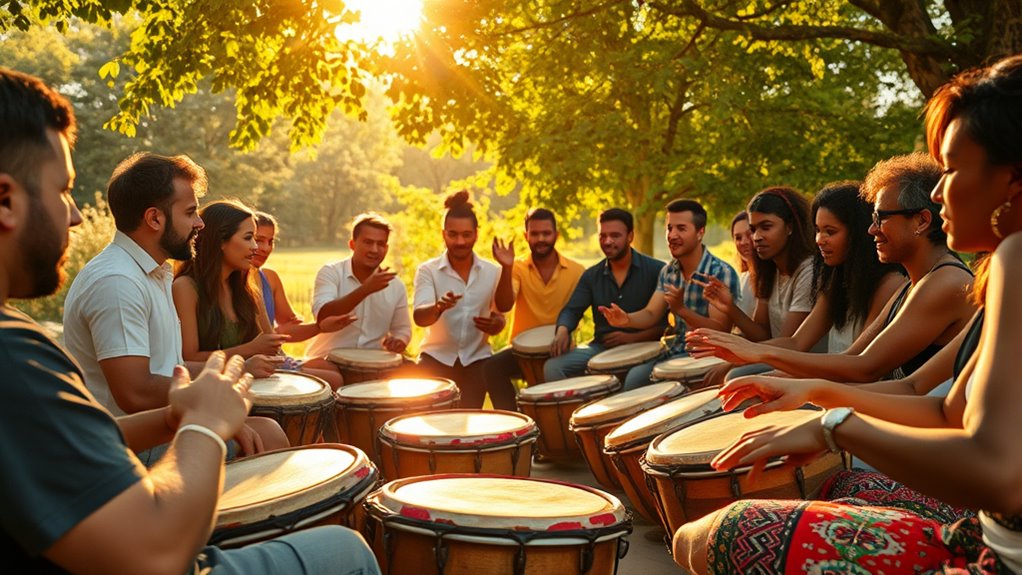

Participating in drum circles provides powerful rhythmic support that can boost your emotional healing and strengthen your sense of community. As you sync with others, you’ll experience enhanced connection, reduced stress, and increased feelings of happiness. Rhythmic alignment encourages trust and non-verbal communication, helping you feel more grounded and resilient. If you keep exploring, you’ll discover how these collective rhythms can truly transform your emotional and social well-being.
Key Takeaways
- Drum circles foster a sense of community through synchronized rhythms, promoting social bonding and emotional connection.
- Rhythmic support in drum circles enhances mindfulness, focus, and stress reduction for participants.
- Group drumming releases endorphins, improving mood and overall emotional well-being.
- Participating in drum circles strengthens non-verbal communication and builds trust among members.
- Rhythmic activities support emotional expression, resilience, and collective healing through shared musical experiences.
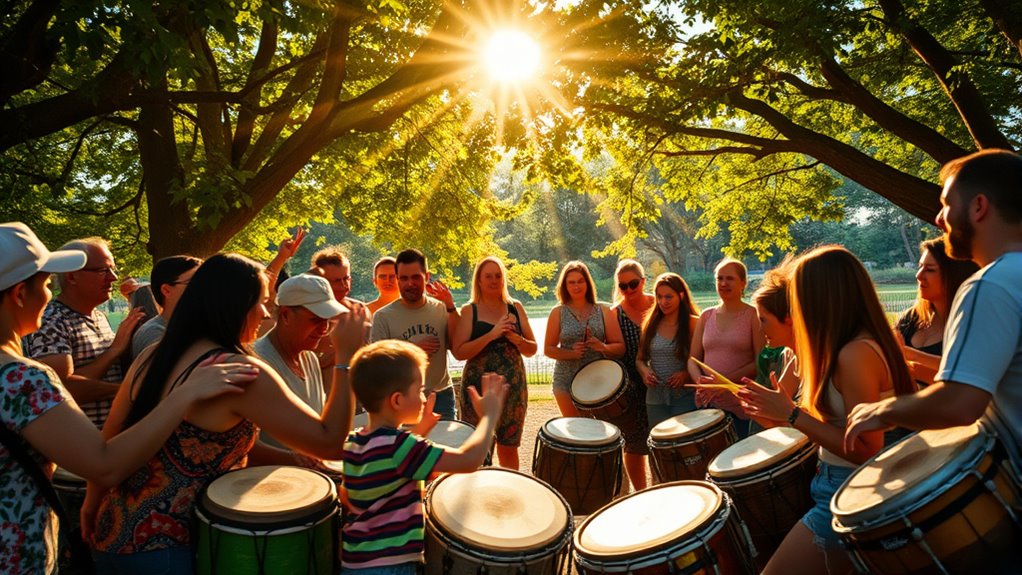
Ever wondered how group drumming can boost your sense of connection and well-being? When you participate in a drum circle, you’re engaging in more than just making noise; you’re tapping into a powerful form of percussion therapy that fosters emotional release, reduces stress, and builds community. The magic lies in group synchronization, where everyone’s rhythm aligns, creating a unified pulse that resonates deeply within each participant. As you rhythmically interact with others, your brain releases feel-good chemicals like endorphins, which enhance your mood and overall sense of happiness. This shared experience can make you feel more connected to those around you and help you feel less isolated.
In a typical drum circle, the focus on percussion therapy helps you break down barriers, encouraging spontaneous expression without judgment. You don’t need to be a professional musician; the emphasis is on participation and connection. As you listen to the steady beat and match your rhythm to the group’s pulse, you’re engaging in a form of non-verbal communication that can be incredibly grounding. The act of synchronizing your movements with others fosters trust and camaraderie, creating a sense of belonging. This shared rhythmic effort can help dissolve feelings of loneliness or anxiety by reminding you that you’re part of a collective effort, contributing to a larger, harmonious whole.
Group synchronization during drumming sessions also enhances your focus and mindfulness. When everyone is working together to maintain a consistent beat, your attention naturally shifts to the present moment. This focus can serve as a form of meditation, calming your mind and reducing mental clutter. As your brain aligns with the group’s rhythm, you experience a sense of flow—an immersive state where time seems to stand still. This phenomenon reinforces the idea that rhythmic support through drumming isn’t just about making sound; it’s about creating a shared emotional and psychological space where healing and connection flourish. Additionally, incorporating structured rhythms can help improve your overall coordination and timing skills over time.
Furthermore, the physical act of drumming stimulates your nervous system and encourages emotional expression that might be difficult to articulate with words. The collective rhythm amplifies feelings of unity, empowerment, and resilience. Whether you’re drumming for stress relief, social bonding, or personal growth, the experience of group synchronization in percussion therapy offers a unique pathway to improved well-being. By engaging in this rhythmic support, you not only enhance your mood but also strengthen your sense of community, making every session a step toward greater emotional health and social connection.
As an affiliate, we earn on qualifying purchases.
Frequently Asked Questions
How Do Drum Circles Improve Mental Health?
You experience mental health benefits from drum circles through group therapy and stress relief. When you join in, the rhythmic activity helps reduce anxiety and promote relaxation. The shared experience fosters connection, making you feel less isolated. As you play along, your mind shifts focus away from worries, providing a calming effect. This combination of social support and rhythmic engagement boosts your mood and enhances emotional resilience.
Can Beginners Easily Join a Drum Circle?
Yes, beginners can easily join a drum circle. Unlike complex music lessons, entry level percussion and group rhythm exercises make participation simple and welcoming. You don’t need prior experience; the focus is on fun and connection. As you tap into the collective beat, you’ll find that everyone is encouraged to contribute, creating an inclusive environment where even novices feel comfortable and engaged in the shared rhythm.
What Types of Drums Are Best for Beginners?
You should choose simple, affordable drums like bongos or djembe for beginners, as they’re easy to handle and help develop your rhythm skills quickly. These drums require minimal care and allow you to focus on rhythm development without worrying about complex maintenance. Starting with these options makes it easier to join drum circles and build confidence, while proper drum maintenance ensures your instrument stays in good shape for ongoing practice.
How Do Drum Circles Foster Community Building?
You foster community building in drum circles by engaging in rhythmic communication, which encourages everyone to listen and respond together. This shared experience boosts group cohesion as participants connect through the beats and rhythms they create collectively. As you collaborate, you break down barriers, promote trust, and feel more connected. The energy and unity from these interactions strengthen bonds, making everyone feel included and part of a supportive community.
Are There Cultural Considerations in Drum Circle Practices?
You should be mindful that cultural traditions and ritual significance shape drum circle practices. As you participate, picture the vibrant colors, sacred symbols, and ancestral melodies woven into each beat. Respect the origins and meanings behind the rhythms, understanding that they carry deep spiritual or communal importance. By honoring these cultural nuances, you create a space of genuine connection, ensuring the drum circle remains a respectful tribute to its diverse cultural roots.
Conclusion
As you join a drum circle, you embrace connection, expression, and rhythm. You find community in beat, strength in pulse, and joy in movement. You discover that through rhythm, you can release stress, build bonds, and unleash your creativity. You realize that drum circles aren’t just about sound—they’re about feeling, sharing, and growing. So keep beating, keep connecting, and let the rhythm guide you toward harmony within yourself and with others.