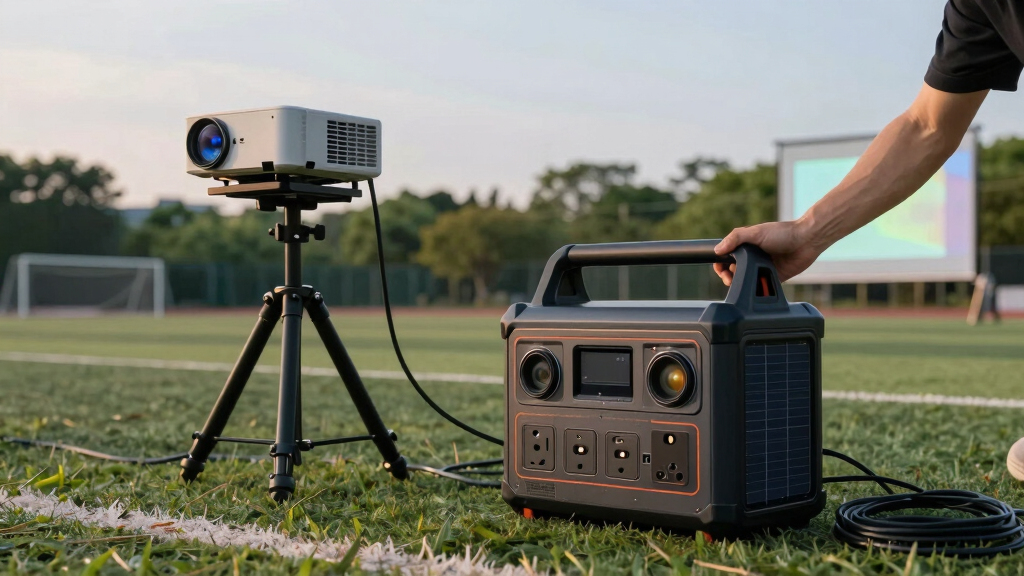

Finding the best power station for outdoor projector setup involves balancing capacity, portability, and power stability. The LIBRIDS Portable Power Station 640Wh stands out as the overall top pick thanks to its robust 640Wh capacity and multiple AC outlets, making it versatile for most outdoor setups. The UDPOWER S2400 offers a massive 2083Wh capacity, ideal for longer events or more power-hungry projectors, but with less portability. Meanwhile, compact options like the Jackery Explorer 300 excel for lightweight, quick setups, though they may lack the juice for extended use. The main challenges for buyers are choosing between higher capacity and portability, as well as ensuring the station can handle the power needs of their projector without overpaying. Continue reading for a detailed breakdown of each option and how to pick the best one for your outdoor setup.

Get sports gear delivered free with Prime
- Fast, free delivery on millions of items
- Prime Video, Amazon Music and more included
- Member-only deals all year
Complete the kit


Key Takeaways
- Higher capacity power stations like the UDPOWER S2400 are best for long outdoor projector sessions but are less portable.
- Portability often comes at the expense of total power; smaller units like the Jackery Explorer 300 suit quick, lightweight setups.
- Multiple AC outlets and high surge wattage are critical for powering larger projectors and sound systems simultaneously.
- Battery chemistry (LiFePO4 vs. standard lithium-ion) impacts longevity and safety, especially for frequent outdoor use.
- Pricing varies widely; investing more typically yields longer-lasting, more reliable power sources suitable for complex setups.


| power station for outdoor projector setup | Weight | Capacity | Battery Type | Wattage |
|---|---|---|---|---|
| LIBRIDS Portable Power Station | — | 640Wh | LiFePO₄ | — |
| Portable Power Station 500W | — | — | — | 500W |
| GRECELL Portable Power Station | — | 230.88Wh | — | — |
| Jackery Explorer 300 Portable | 7.5 lbs | 292Wh | — | — |
| UDPOWER S2400 Portable Power S | 41 lbs | — | — | 2400W |
| 1000W Portable Power Station 1 | 27.73 lbs | 1024Wh | LiFePO4 | 1000 watts |
| ALLWEI Portable Power Station | 6.4 lbs | 256Wh | LiFePO4 | — |
| Jackery HomePower 2000 Plus v2 | 40.6 pounds | — | Battery Powered | 2200 watts |
| Anker SOLIX S2 Portable Power | 35.7 lbs | 2010Wh | LFP (Lithium Iron Phosphate) | — |
| ABOK Ark3600 Portable Power St | 92 pounds | — | — | 3600W |
More Details on Our Top Picks
LIBRIDS Portable Power Station 640Wh, 1200W Surge, Solar Generator with 4 AC Outlets
The LIBRIDS Portable Power Station stands out for its robust 640Wh capacity combined with a high surge power of 1200W, making it well-suited for powering sensitive electronics and multiple devices simultaneously. Its fast 1.5-hour charging time ensures quick turnaround, and the pure sine wave inverter adds a layer of protection for delicate electronics. Compared to the Jackery Explorer 300, it offers greater surge capacity, which is crucial for startup loads of larger devices, but the LIBRIDS is primarily designed for indoor or covered outdoor use, as its durability in wet conditions isn’t specified. The long cycle life of over 4000 cycles with LiFePO₄ chemistry ensures long-term reliability, yet its weight and size are not clearly detailed, which could impact portability. Overall, this model makes the most sense for users needing dependable backup power that can handle a variety of devices at once while prioritizing longevity and safety.
Pros:- Fast charging in just 1.5 hours for quick readiness
- Supports multiple devices with 4 AC outlets and USB ports
- Long-lasting LiFePO₄ battery with over 4000 cycles
- Pure sine wave inverter safeguards sensitive electronics
Cons:- Indoor use only, limiting outdoor versatility
- Weight and size details are not specified, affecting portability assessment
Best for: Homeowners or campers who need reliable backup power for sensitive electronics and multiple devices in a protected environment.
Not ideal for: Outdoor enthusiasts expecting to use the unit in wet or rugged conditions, due to lack of specified weather resistance or portability details.
- Capacity:640Wh
- Surge Power:1200W
- Rated Power:600W
- Output Ports:4 AC outlets, USB ports
- Charging Time:1.5 hours
- Battery Type:LiFePO₄
- Battery Cycles:4000+
- Dimensions:8.3″L x 6.9″W x 8.2″H
Our verdict“This power station is ideal for users seeking long-term, reliable backup power in sheltered environments where durability in adverse weather isn’t critical.”
Portable Power Station 500W, 519.48Wh Solar Generator Backup with 2 AC Outlets, USB-C PD 60W, for Outdoor Camping, Home Emergency
The Portable Power Station 500W offers a solid 519.48Wh capacity with multiple output options, including USB-C PD 60W and wireless charging, making it highly adaptable for outdoor trips and emergencies. Its 10 output ports enable powering several devices simultaneously, comparable to the larger UDPOWER S2400, but with a more compact form factor and lower overall capacity. The fast USB-C PD charging supports quick device recharges, yet its 500W rated wattage limits usage to smaller appliances, unlike the UDPOWER which can handle more demanding loads. Despite being portable at 18 pounds, this unit’s recharge options via solar, wall, or car provide flexibility in various outdoor scenarios. It’s best suited for users who prioritize multiple device compatibility and quick recharging over sheer capacity or heavy-duty power needs.
Pros:- Large 519.48Wh capacity supports multiple devices
- Multiple output types including USB-C PD 60W and wireless charging
- Fast recharging via solar, wall, or car outlet
- Built-in safety protections and BMS for device safety
Cons:- Limited to 500W rated devices, restricting heavier appliances
- Relatively heavy for frequent portables at 18 pounds
Best for: Campers, outdoor adventurers, or families needing portable power for multiple small devices and emergency use.
Not ideal for: Heavy-duty tools or appliances that require over 500W, or those expecting fast recharges in low sunlight conditions, as solar recharging depends heavily on sunlight availability.
- Wattage:500W
- Battery Capacity:519.48Wh
- Output Voltage:110V
- Number of Outlets:10
- Charging Methods:Solar, car, wall
- USB-C PD Output:60W
Our verdict“This power station suits outdoor users who need flexible, multi-device charging with moderate power demands and portability in mind.”
GRECELL Portable Power Station 330W, 230.88Wh Solar Generator
The GRECELL Portable Power Station delivers 230.88Wh and 330W (600W surge), making it suitable for charging laptops, phones, and small lights. Its lightweight and compact design set it apart from bulkier options like the UDPOWER S2400, but with less overall capacity. The inclusion of fast charging ports and multiple recharge options, including solar and car, provide convenience for short trips or emergency backup. However, its limited capacity restricts usage to low-power devices, and the absence of detailed solar compatibility information may pose challenges in optimizing solar input. It’s best for users who prioritize portability and quick device recharges over extended power needs or high wattage appliances.
Pros:- Very lightweight and compact for portability
- Multiple charging options including solar and car
- Fast charging ports for quick device recharging
- Safety features with upgraded BMS
Cons:- Limited to 330W devices, restricting heavier equipment
- Lack of detailed solar panel compatibility info
Best for: Lightweight travelers, minimalists, or emergency kit builders needing a small, portable power source for essential devices.
Not ideal for: Heavy-duty camping or power-intensive appliances, due to limited capacity and lower surge power.
- Capacity:230.88Wh
- Power Output:330W (600W surge)
- USB-C PD:60W
- Ports:AC, USB-C, USB-A, car
- Recharge Methods:AC, solar, car
Our verdict“Ideal for ultralight users needing reliable, small-scale power for essential devices during short outings or emergencies.”
Jackery Explorer 300 Portable Power Station, 292Wh
The Jackery Explorer 300 offers a compact 292Wh capacity in a lightweight package weighing only 7.5 pounds, making it perfect for backpackers and campers. Its durable LiFePO₄ chemistry supports over 4,000 charge cycles, ensuring long-term use. While its 2 AC outlets and multiple USB ports provide versatile charging options, it’s limited to about 300W of rated power, which restricts usage to smaller devices. The unit’s solar recharge time of approximately 2.8 hours with a 100W panel makes it suitable for short trips, but the lack of included solar panels means additional purchase is necessary. It excels in portability and durability but isn’t designed for heavy-duty power demands or prolonged high-wattage device use.
Pros:- Lightweight and easy to carry
- Over 4,000 charge cycles for durability
- Versatile charging options including USB-C PD and car port
- Supports fast solar charging
Cons:- Solar panel not included, requiring extra purchase
- Limited to 300W rated output, restricting heavier devices
Best for: Backpacking enthusiasts or casual campers who need a reliable, portable power source for small devices and long-lasting cycles.
Not ideal for: Running larger appliances or powering multiple devices simultaneously at high wattage, due to limited capacity and output.
- Capacity:292Wh
- Weight:7.5 lbs
- Outlets:2 AC, USB-C, USB-A, car port
- Charge Cycles:Over 4,000
- Charging Time:Approximately 2.8 hours
Our verdict“This power station is perfect for travelers prioritizing portability and long-term durability over high power capacity or heavy-duty applications.”
UDPOWER S2400 Portable Power Station with Solar Panel Option, 2083Wh LiFePO4, 2400W (Surge 3000W) UPS, 6 AC Outlets, Solar Generator for RVs Camping Emergency, Home Backup Bundle
The UDPOWER S2400 provides an enormous 2083Wh capacity paired with 2400W (surge 3000W), making it capable of supporting multiple high-wattage devices simultaneously—far surpassing smaller units like the GRECELL or Jackery Explorer 300. Its six AC outlets and extensive port options make it suitable for large outdoor setups, RV use, or emergency home backup. The rapid recharge time of just 1.3 hours from zero to full, combined with solar support up to 440W, offers unmatched flexibility for extended use. However, at 41 pounds, it’s less portable and better suited for stationary outdoor setups or backup power at home rather than frequent carrying. This pick makes the most sense for users needing serious power capacity and durability in outdoor or emergency scenarios, accepting some portability tradeoff.
Pros:- Massive 2083Wh capacity for prolonged use
- Supports multiple high-wattage devices simultaneously
- Fast 1.3-hour recharge via AC or solar
- Multiple outlets including 6 AC ports
Cons:- Heavy at 41 pounds, limiting portability
- Limited solar input at 440W, which may slow recharging in low sunlight
Best for: RVers, emergency preparedness households, or outdoor enthusiasts needing large, reliable power for multiple devices over extended periods.
Not ideal for: Users seeking lightweight, portable units for casual camping or daily short trips, as the weight limits mobility.
- Battery Capacity:2083Wh
- Wattage:2400W
- Surge Power:3000W
- Charge Cycles:Over 4000
- Dimensions:15.8″ x 9.5″ x 10.1″
- Weight:41 lbs
Our verdict“This powerhouse is best suited for users who require extensive, reliable power over long durations in outdoor or emergency environments, despite its weight.”
1000W Portable Power Station 1024Wh LiFePO4 for Outdoor & Home
This model stands out for its impressive capacity of 1024Wh and 1000W continuous output, making it suitable for running multiple devices or small appliances during outdoor projects. Compared with the ALLWEI 300W, it offers significantly more power, but at a weight of nearly 28 pounds, it’s less portable. Its support for solar input up to 300W enhances off-grid independence, though limited runtime at maximum load means it’s best suited for shorter outdoor projector sessions or backup power rather than sustained use. Multiple output ports, including USB-C and AC outlets, provide versatility, yet the weight and dependency on sunlight for optimal solar charging could be drawbacks for some users.
Pros:- High capacity of 1024Wh supports extended outdoor use
- Powerful 1000W continuous output handles multiple devices
- Supports solar charging up to 300W for off-grid flexibility
- Multiple fast-charging ports including USB-C and AC outlets
Cons:- Relatively heavy at 27.73 lbs, less portable
- Limited runtime of 2 minutes at maximum load
- Requires sunlight for optimal solar charging, which may not always be available
Best for: Outdoor enthusiasts or professionals who need reliable, high-capacity power on the go
Not ideal for: Casual campers or those prioritizing ultra-lightweight gear, due to its weight and size
- Wattage:1000 watts
- Capacity:1024Wh
- Battery Type:LiFePO4
- Weight:27.73 lbs
- Dimensions:18″L x 12″W x 16″H
- Output Ports:2×110V AC, 1×60W PD USB-C, 2×USB-A
Our verdict“Best suited for users who need substantial power capacity and versatility in outdoor or emergency setups, accepting some weight for performance.”
ALLWEI Portable Power Station 300W, 256Wh Solar Generator LiFePO4 Battery
This pick makes the most sense for those seeking a lightweight, portable power source with a decent capacity of 256Wh, suitable for brief outdoor projector setups or emergency backup. When compared to the Jackery HomePower 2000 Plus, it offers less overall capacity but at a fraction of the weight—just 6.4 pounds—making it ideal for quick trips or light setups. Its 300W continuous power output is enough for small projectors and devices, though it won’t handle larger appliances or extended high-wattage use. The multiple output ports, including USB-C and AC, enhance versatility, but the need for a separate solar panel limits its standalone solar capability and its durability might not match heavier models.
Pros:- Very lightweight at just 6.4 lbs for easy transport
- Long-lasting LiFePO4 battery with 3000 cycles ensures durability
- Multiple output options including USB-C, AC, and car lighter
- Supports multiple recharging methods including solar and car power
Cons:- Limited capacity of 256Wh restricts extended use
- Requires a separate solar panel for solar recharging
- Durability may be compromised in rough outdoor conditions
Best for: Hikers, campers, or emergency preparedness users who need a portable, reliable power source for short-term use
Not ideal for: Powering larger projectors or extended outdoor movie nights, due to its limited capacity and output
- Capacity:256Wh
- Continuous Power:300W
- Peak Surge Power:600W
- Battery Type:LiFePO4
- Weight:6.4 lbs
- Output Ports:1 AC, 2 DC5521, 1 car cigarette lighter, 1 USB-A 18W, 1 USB-C PD 60W
Our verdict“Ideal for users who prioritize portability and quick, reliable power for short outdoor sessions or emergencies, with some limitations on capacity.”
Jackery HomePower 2000 Plus v2 Power Station, 2048Wh, 2400W AC Output
This model excels in providing a high-capacity 2048Wh battery with a robust 2400W AC output, making it suitable for powering larger devices or multiple projectors during outdoor events. It compares favorably to the Anker SOLIX S2 in capacity, but at 40.6 pounds, it’s heavier and less portable for remote setups. Its expandable capacity up to 12kWh offers long-term backup solutions, though this feature is less relevant for short outdoor projector sessions. While it supports fast USB-C charging and has a compact footprint for its capacity, it relies on optional solar panels for renewable power and may be overkill for casual outdoor use.
Pros:- Large 2048Wh capacity supports extended use
- High 2400W output powers multiple high-wattage devices
- Expandable to 12kWh for long-term backup needs
- Fast USB-C charging for modern devices
Cons:- Heavy at over 40 pounds, less portable
- Limited to 2200W continuous power, not suitable for high-demand appliances
- Requires additional solar panels for renewable recharging
Best for: Homeowners or professionals needing reliable backup power for large outdoor setups or emergencies
Not ideal for: Lightweight campers or outdoor users seeking ultra-portable solutions, due to its weight and size
- Wattage:2200 watts
- Battery Capacity:2048Wh
- Output Wattage:2400W
- Expandable Capacity:up to 12kWh
- Weight:40.6 pounds
- Battery Type:Battery Powered
Our verdict“Best for users who prioritize high capacity and expandability over portability for outdoor power backup or emergency use.”
Anker SOLIX S2 Portable Power Station, 2010Wh, 1500W
This option makes a compelling case for those seeking a balance of high capacity (2010Wh) and long battery life, with a 10,000-cycle lifespan. When compared with the ABOK Ark3600, it offers a slightly lower capacity but at a more manageable weight of 35.7 pounds, making it easier to move around. Its 1500W continuous output means it can power most projectors and smaller appliances, but not the highest-demand devices. The inclusion of solar input support up to 400W makes it suitable for extended outdoor use, though its limited 1500W output could be restrictive for larger equipment.
Pros:- High capacity with 2010Wh supports extended outdoor projects
- Long lifespan of 10,000 cycles ensures durability
- Lightweight and portable for its capacity
- Supports solar input up to 400W for renewable recharging
Cons:- Limited to 1500W continuous output, restricting high-wattage device use
- No 12V DC port available
- Requires multiple charging methods for optimal operation
Best for: Long-term outdoor users or professionals needing a reliable, durable power source with long cycle life
Not ideal for: Users requiring maximum power output or who need to power high-wattage appliances continuously
- Capacity:2010Wh
- Continuous Power:1500W
- Peak Power:3000W
- Battery Type:LFP (Lithium Iron Phosphate)
- Dimensions:8.2 x 11.1 x 12.7 inches
- Weight:35.7 lbs
Our verdict“Ideal for outdoor setups requiring long-term reliable power with long battery life, accepting some power limitations.”
ABOK Ark3600 Portable Power Station with 400W Solar Panel, 2000W Solar Input
This powerhouse stands out for its enormous 3840Wh capacity, expandable to 11520Wh, making it suitable for large outdoor projector setups or extended events. Compared with the Jackery HomePower 2000 Plus, it offers far more capacity and additional output ports, though it’s significantly heavier at 92 pounds, which may hinder frequent transportation. Its rapid charging time of around 1.3 hours via AC and solar makes it highly efficient, and the Bluetooth app allows for remote management. The complex setup and weight are tradeoffs for its extensive capabilities, making it better suited for semi-permanent outdoor installations rather than casual use.
Pros:- Massive capacity of 3840Wh, expandable to 11520Wh
- Supports multiple charging methods including 2000W solar input
- Numerous output ports (15 total) for versatile device connections
- Bluetooth app for remote monitoring and control
Cons:- Heavy at 92 pounds, difficult to move without assistance
- High price point reflecting extensive features and capacity
- Setup complexity may be overwhelming for casual users
Best for: Event organizers, outdoor venues, or emergency responders needing massive, expandable power supplies
Not ideal for: Casual users or those needing portable, lightweight solutions, due to its weight and complexity
- Wattage:3600W
- Battery Capacity:3840Wh (expandable to 11520Wh)
- Cycle Life:4000 cycles
- Input Power:2000W solar, 1500W AC
- Weight:92 pounds
- Output Power:3600W rated, 4500W peak
Our verdict“Best suited for large-scale outdoor projects or emergency backup where capacity and expandability outweigh portability concerns.”

How We Picked
The products included in this roundup were selected based on a combination of capacity, output power, portability, build quality, and versatility. We prioritized units with sufficient watt-hour ratings to support outdoor projectors for several hours and checked for features like multiple outlets, fast recharging, and durability. The rankings reflect a balance between capacity and portability—larger units are favored for extended outdoor events, but smaller options are included for quick, mobile setups. We also considered user feedback and expert insights to ensure that each product offers reliable performance in outdoor conditions. Ultimately, the goal was to identify power stations that can handle the demands of outdoor projectors while fitting different user needs and budgets.| power station for outdoor projector setup | Battery Type |
|---|---|
| LIBRIDS Portable Power Station | LiFePO₄ |
| Portable Power Station 500W | — |
| GRECELL Portable Power Station | — |
| Jackery Explorer 300 Portable | — |
| UDPOWER S2400 Portable Power S | — |
| 1000W Portable Power Station 1 | LiFePO4 |
| ALLWEI Portable Power Station | LiFePO4 |
| Jackery HomePower 2000 Plus v2 | Battery Powered |
| Anker SOLIX S2 Portable Power | LFP (Lithium Iron Phosphate) |
| ABOK Ark3600 Portable Power St | — |
Factors to Consider When Choosing Best Power Station For Outdoor Projector Setup
Choosing the best power station for outdoor projector setup requires understanding several key factors. Capacity determines how long your projector can run without recharge, while portability affects ease of transport and setup. Power output, including surge capacity, is vital to support high-wattage devices. Safety features, battery chemistry, and recharging options also influence long-term reliability. This guide breaks down these considerations to help you make an informed decision that balances your specific needs and budget.Capacity and Runtime
The capacity of a power station, measured in watt-hours (Wh), directly influences how long your projector can operate without additional charging. For outdoor setups where power sources are limited, choosing a unit with at least 500Wh is advisable for a few hours of use, but longer events may require 1000Wh or more. Keep in mind that actual runtime depends on your projector’s wattage, so calculating total consumption helps select the right capacity. Overestimating capacity can lead to unnecessary expense, but underestimating risks incomplete sessions or device shutdowns.
Power Output and Surge Capacity
Ensure the power station provides enough continuous power (watts) to run your projector, which typically requires between 100W and 300W. Surge capacity—peak wattage—matters when starting up the projector, as many devices draw a higher initial power. A unit with a surge rating at least 20-30% above your projector’s startup wattage offers a safer margin. If you plan to run additional equipment like speakers or lighting, factor in their power needs to avoid overloads and shutdowns during use.
Portability and Design
For outdoor setups, the size and weight of the power station are practical considerations. Compact units like the Jackery Explorer 300 excel for quick, mobile setups but may lack the capacity for longer sessions. Larger units with wheels and durable handles facilitate transport for extended outdoor events but tend to be heavier. Consider your typical setup environment—if you need to carry the power station over rough terrain, prioritize rugged construction and manageable weight.
Battery Chemistry and Rechargeability
Battery chemistry affects safety, longevity, and charging speed. LiFePO4 batteries, found in higher-end models like the UDPOWER S2400, offer longer cycle life and greater thermal stability, making them more suitable for frequent outdoor use. Standard lithium-ion batteries are less durable but often cheaper. Additionally, check if the power station supports multiple recharging options such as solar, AC, or car adapters, giving you flexibility when off-grid for extended periods.
Additional Features and Value
Features like multiple AC outlets, USB-C PD ports, and fast-charging capabilities enhance usability, especially if powering multiple devices. Built-in safety features such as overload protection prevent damage to your projector. Also, consider the warranty and customer support, as outdoor equipment faces harsher conditions. While higher capacity units tend to cost more, investing in reliable, feature-rich models reduces risk of failure during critical outdoor events.
Frequently Asked Questions
How long can a power station run an outdoor projector?
The runtime depends on the power station’s capacity and the projector’s wattage. For example, a 640Wh unit can run a 100W projector for approximately 6-7 hours under ideal conditions. Higher-capacity units like 2000Wh can deliver even longer durations, suitable for all-day outdoor screenings. Remember to account for surge wattage and additional connected devices, which may reduce total runtime. Calculating total power needs before purchase ensures your setup remains powered for the duration of your event.
Is solar compatibility worth paying extra for?
Solar recharging capabilities provide significant convenience for outdoor setups without access to grid power. While solar panels can extend operating time, their effectiveness depends on sunlight conditions and panel size. Investing in a power station with solar compatibility is advantageous if you plan extended outdoor events or camping trips, but it often comes at a higher initial cost. For short-term or emergency use, a standard unit with quick recharge options might be more practical and cost-effective.
What’s better: LiFePO4 or lithium-ion batteries?
LiFePO4 batteries are generally better for outdoor use because they offer longer cycle life, improved thermal stability, and greater safety in rugged environments. They tend to withstand more charge-discharge cycles, making them a durable choice for frequent outdoor use. Lithium-ion batteries are lighter and cheaper but wear out faster and are more sensitive to temperature extremes. When selecting a power station for outdoor projector setup, prioritizing LiFePO4 can lead to better long-term reliability and safety.
Should I prioritize capacity or portability?
This decision depends on your typical outdoor setup. If you need to run a projector for several hours or multiple devices simultaneously, a higher capacity unit is essential, even if it’s bulkier. Conversely, if portability and quick deployment are more important, smaller units like the Jackery Explorer 300 make sense, but they may limit runtime. Balancing these factors based on your event length and mobility needs ensures you choose a power station that performs reliably without unnecessary bulk.
Are there any safety considerations I should know?
Safety features such as overload protection, thermal regulation, and short-circuit prevention are critical when powering sensitive equipment like projectors outdoors. Ensure the power station has certified safety mechanisms and reliable battery chemistry, like LiFePO4, to minimize risks of overheating or failure. Proper ventilation and avoiding overcharging are also important. A well-designed, safety-conscious device not only protects your equipment but also ensures safe operation in unpredictable outdoor environments.
Conclusion
For most users seeking a reliable, all-around solution, the LIBRIDS Portable Power Station 640Wh offers an excellent balance of capacity and portability, making it the best overall choice. If you need longer runtime and don’t mind the weight, the UDPOWER S2400 is ideal for extended outdoor screenings or multiple devices. Beginners or casual users will appreciate compact models like the Jackery Explorer 300 for their simplicity and ease of use. For those prioritizing safety and longevity, units with LiFePO4 batteries, such as the UDPOWER, provide peace of mind. Ultimately, your choice depends on your specific needs—whether that’s maximum power, portability, or budget constraints.
NFL season / tailgating Picks
team gear
As an affiliate, we earn on qualifying purchases.