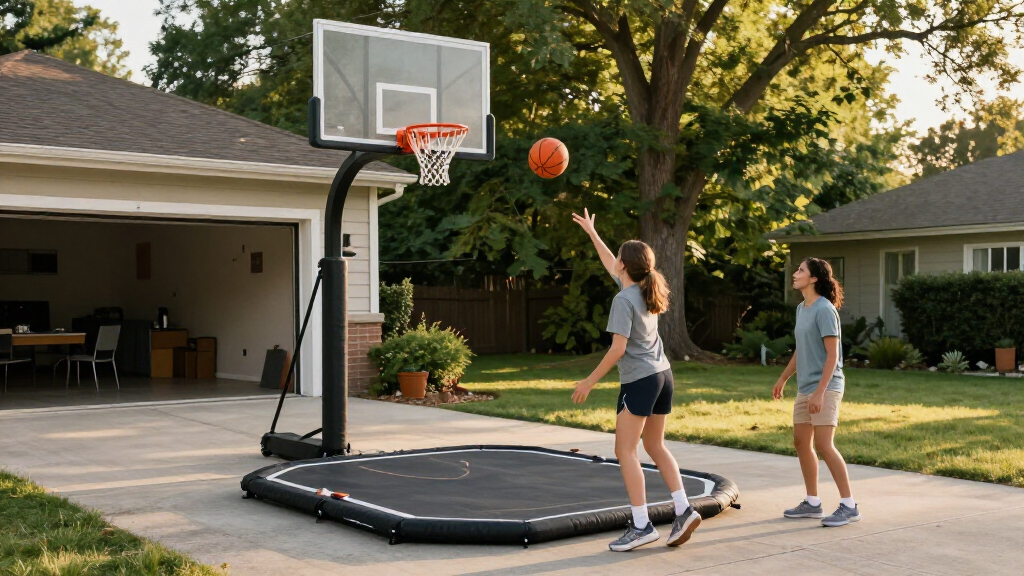

Portable indoor basketball hoops come in two very different shapes: over-the-door mini hoops for casual desk or bedroom play, and adjustable stand-alone systems that grow with a child from toddler dunking to real shooting practice. The tradeoff is simple — mini hoops win on space and price, while adjustable bases win on stability, realism, and longevity. My top pick, the Seray Adjustable Kids Basketball Hoop (3.2–7.2 ft), offers the widest height range and the sturdiest base of the group, making it the best long-term buy for families. For tight spaces, the SKLZ Pro Mini is the clear over-the-door winner, while the Hurtle 5–7 ft model makes sense for older kids who already shoot at regulation-style heights. Read on for the full breakdown, including who each hoop is actually for.

Get sports gear delivered free — and shop member deals
- Fast, free delivery on millions of items
- Access to Prime Big Deal Days deals on October 6–7
- Prime Video, Amazon Music and more included
Complete the kit


Key Takeaways
- Height range was the single biggest differentiator: the Seray (3.2–7.2 ft) spans five full years of growth, while fixed-height and narrow-range hoops like the SKLZ Pro Mini will be outgrown or never ‘grown into’ at all.
- Base stability separates the stand-alone hoops more than rim quality — models with fillable or wider bases (Seray, Hurtle) survive dunking, while lightweight tri-pod style poles tip easily with aggressive play.
- The SKLZ Pro Mini plays a completely different game than the other six: it’s a wall-mounted office/bedroom toy, so buyers should first decide between door-mount and floor-standing before comparing specs.
- Bonus features like the electronic scoreboard and timer on pick #7 add real engagement for solo play, but they add cost and another component that can break — they’re a nice-to-have, not a deciding factor.
- Across the lineup, assembly difficulty varied widely; several budget adjustable poles use multi-segment poles that flex at the joints, which is the most common complaint pattern with cheaper adjustable hoops.
| Yohood Adjustable Kids Basketball Hoop, 3–7 ft |  | Best Overall | Adjustable height: 3–7 ft | Frame: Reinforced steel | Backboard: High-impact | VIEW LATEST PRICE | See Our Full Breakdown |
| SKLZ Pro Mini Indoor Basketball Hoop with Ball |  | Best Door-Mount Pick | Backboard size: 18 x 12 inches | Backboard material: Polycarbonate | Rim diameter: 9 inches | VIEW LATEST PRICE | See Our Full Breakdown |
| Hurtle Adjustable Portable Basketball Hoop for Kids, 5–7 ft |  | Best for Older Kids and Teens | Height: Adjustable from 5 to 7 ft | Dimensions: 32 in D x 33 in W x 84 in H | Materials: Metal, polyethylene (PE), PET | VIEW LATEST PRICE | See Our Full Breakdown |
| Adjustable Kids Basketball Hoop Set, 3.5–6.2 ft (ShyLizard) |  | Best Complete Starter Kit | Height range: 3.5–6.2 ft | Recommended age: 3–8 years | Mounting options: Freestanding or door/wall mounted | VIEW LATEST PRICE | See Our Full Breakdown |
| GMAOPHY Adjustable Kids Basketball Hoop Set |  | Best Budget Pick for Young Players | Adjustable height: 3.5–6.2 ft | Recommended age: 3–8 years | Mounting options: Stand or wall/door mount | VIEW LATEST PRICE | See Our Full Breakdown |
| Seray Adjustable Kids Basketball Hoop, 3.2–7.2 ft |  | Best Grow-With-Me Pick | Height range: 3.2–7.2 ft | Backboard size: 29 inches | Backboard material: Transparent PC | VIEW LATEST PRICE | See Our Full Breakdown |
| Kids Adjustable Basketball Hoop with Scoreboard and Timer |  | Best for Competitive Play | Rim height: 2.98–5.8 ft | Play modes: 60-second countdown and untimed scoring | Countdown scoring: 2 points first 45 seconds; 3 points final 15 seconds | VIEW LATEST PRICE | See Our Full Breakdown |
| portable indoor basketball hoop | Base |
|---|---|
| Yohood Adjustable Kids Basketb | — |
| SKLZ Pro Mini Indoor Basketbal | — |
| Hurtle Adjustable Portable Bas | Fillable, with wheels |
| Adjustable Kids Basketball Hoo | Triangular; fillable with water or sand |
| GMAOPHY Adjustable Kids Basket | Fillable with water or sand |
| Seray Adjustable Kids Basketba | — |
| Kids Adjustable Basketball Hoo | Fillable with sand or water |
More Details on Our Top Picks
Yohood Adjustable Kids Basketball Hoop, 3–7 ft
This option stands out for having the widest height range in the lineup, stretching from 3 to 7 feet, which means it can realistically grow with a child from preschool through late elementary school. Compared with the Hurtle, which tops out at 7 feet but starts at 5, the Yohood covers the toddler years the Hurtle simply can’t. The triangular support structure is a meaningful step up from the fillable bases on the ShyLizard and GMAOPHY sets — it’s built for stability without requiring water or sand, though the tradeoff is a less forgiving footprint if a hard shot knocks it. The two front wheels make repositioning between rooms or patio and playroom genuinely manageable. Its weakest point: it’s still sized for kids, so teens and adults should look elsewhere.
Pros:- Broadest height range here (3–7 ft), so it grows with the child
- Triangular support adds stability without needing a filled base
- Front wheels make it easy to move between rooms or in and outdoors
- Weather-resistant net and steel frame hold up outdoors
Cons:- Assembly is required before first use
- Kid-sized build means it’s outgrown by older players
Best for: Families with multiple kids of different ages who want one hoop that spans roughly ages 3 to 10 without buying twice
Not ideal for: Teens or adults — the build and rim are scaled for children’s play, not full-court shots or dunks
- Adjustable height:3–7 ft
- Frame:Reinforced steel
- Backboard:High-impact
- Net:All-weather polypropylene
- Base support:Triangular support structure
- Mobility:Two front wheels
- Assembly:Minimal assembly required
Our verdict“If you want a single buy-it-once hoop that survives multiple childhoods and moves around the house easily, this is the one to pick.”
SKLZ Pro Mini Indoor Basketball Hoop with Ball
Everything else in this roundup takes floor space; the SKLZ Pro Mini takes zero. It slides over a door frame, which makes it the natural choice for bedrooms, dorms, and offices where a freestanding base like the Yohood’s would be impossible. The spring-action break-away rim is the real differentiator — no other product here can survive dunk practice, because none of the others flex under load. The foam-padded mounts are a thoughtful touch that protects door frames from scuffing, and the included 5-inch rubber ball is soft enough for indoor walls and furniture. Compared with the GMAOPHY set, which includes three balls, you only get one here — and you’ll need a door that can handle the repeated slamming motion that hoop play produces.
Pros:- Zero floor footprint — mounts over any standard door
- Spring-action break-away rim handles dunking
- Foam-padded mounts protect the door frame
- Shatter-resistant polycarbonate backboard is safe indoors
Cons:- Requires a sturdy, suitable door frame for mounting
- Only one mini ball included, and it’s limited to mini-hoop play
Best for: Older kids, teens, and adults who want a shooting outlet in a bedroom or office without giving up any floor space
Not ideal for: Toddlers and young kids — it’s a mini hoop at 18 x 12 inches, not a learn-to-shoot system like the ShyLizard set
- Backboard size:18 x 12 inches
- Backboard material:Polycarbonate
- Rim diameter:9 inches
- Rim type:Spring-action break-away steel
- Net:30-ply
- Included ball:5-inch indoor-safe rubber basketball
- Mounting:Over-the-door slide-on mounts with foam padding
Our verdict“For dorm rooms, bedrooms, and offices, this is the smarter buy than any freestanding hoop because it costs you no floor space at all.”
Hurtle Adjustable Portable Basketball Hoop for Kids, 5–7 ft
Where most hoops here bottom out for toddlers, the Hurtle starts at 5 feet and climbs to 7 — the tallest practical range for pre-teens among the freestanding options. That means a 10- or 12-year-old gets a hoop that still feels like real basketball rather than a toy, which is exactly where the ShyLizard and GMAOPHY sets (both capped at 6.2 ft) fall short. The fillable wheeled base is the honest tradeoff: empty, it rolls easily between the garage and driveway; full of water or sand, it’s stable enough for real shooting but heavier to relocate. The shatterproof backboard and steel pole give it a sturdier feel than the lightweight GMAOPHY, and the one-year warranty adds some purchase confidence. Just know that no matter how you configure it, adults won’t get a regulation experience.
Pros:- Highest starting height in the roundup, suited to older kids
- Fillable base with wheels balances stability and portability
- Shatterproof backboard and steel pole feel sturdier than lightweight rivals
- One-year warranty included
Cons:- Base must be filled with water or sand for safe play
- 7 ft ceiling means it’s outgrown by serious players
Best for: Kids roughly 8 to 14 who have outgrown toddler hoops but don’t need a full-size driveway system
Not ideal for: Serious teen or adult players — even at 7 feet the rim and backboard are scaled down from regulation
- Height:Adjustable from 5 to 7 ft
- Dimensions:32 in D x 33 in W x 84 in H
- Materials:Metal, polyethylene (PE), PET
- Backboard:Shatterproof
- Base:Fillable, with wheels
- Use:Indoor and outdoor
- Warranty:1 year
Our verdict“The pick for kids too old for 6-foot toys but too young for a cemented driveway system — just commit to filling the base.”
Adjustable Kids Basketball Hoop Set, 3.5–6.2 ft (ShyLizard)
What separates this set is everything in the box: three basketballs, an inflatable pump, rim, net, and base. Compared with the Yohood, which arrives as just a hoop, this is a full first-basketball experience for a young child — when one ball rolls under the couch, two spares keep the game going. The dual mounting options are the other clever move: it works freestanding like the Hurtle, but the backboard can also move to a door or wall for tight playrooms, similar in spirit to the SKLZ door-mount. The 3.5–6.2 ft range targets ages 3–8 squarely, which means kids past that window will outgrow it faster than the Yohood’s 7-foot ceiling. And the triangular base needs water or sand added before real play, or it will tip.
Pros:- Three balls plus a pump included — a true out-of-the-box starter kit
- Works freestanding or mounted on a door or wall
- Height range covers ages 3–8 well
- Triangular base accepts water or sand for stability
Cons:- Base is tippy until filled
- Assembly required, and the ceiling height caps out early
Best for: Parents buying a first basketball setup for a 3-to-8-year-old who want balls and pump included in one purchase
Not ideal for: Kids over about 8 — the 6.2 ft maximum height limit comes fast, and the Yohood or Hurtle age better
- Height range:3.5–6.2 ft
- Recommended age:3–8 years
- Mounting options:Freestanding or door/wall mounted
- Indoor/outdoor use:Both
- Base:Triangular; fillable with water or sand
- Included components:Backboard, 3 basketballs, pump, rim, net, base, accessories
Our verdict“The easiest one-purchase first hoop for young kids — just accept they’ll outgrow it by around age 8.”
GMAOPHY Adjustable Kids Basketball Hoop Set
On paper the GMAOPHY mirrors the ShyLizard almost exactly — same 3.5–6.2 ft range, same three balls and pump, same door-or-stand mounting. Where it differs is weight and heft: at just 16 ounces, this is the lightest, easiest-to-carry option in the entire roundup, which makes it ideal for dragging between rooms or to a grandparent’s house. That lightness is also its defining tradeoff. Unlike the Yohood’s triangular steel-reinforced frame, the GMAOPHY shakes noticeably during play unless the base is weighted down, so filling it with water or sand isn’t optional — it’s required. The non-toxic materials are a sensible safety point for the 3–8 age group it targets. Treat it as an affordable starter rather than a system, and expectations land right.
Pros:- Lightest option here — genuinely portable between rooms and locations
- Three balls and pump included for group play
- Stand or door/wall mounting adds placement flexibility
- Non-toxic materials suit the youngest players
Cons:- Base shakes during play unless filled with water or sand
- Assembly required and the 6.2 ft cap limits longevity
Best for: Budget-conscious households or gift-givers wanting an inexpensive, lightweight first hoop for a 3-to-8-year-old
Not ideal for: Anyone wanting rock-solid stability out of the box — the ultralight frame wobbles until the base is weighted
- Adjustable height:3.5–6.2 ft
- Recommended age:3–8 years
- Mounting options:Stand or wall/door mount
- Base:Fillable with water or sand
- Material:Non-toxic, sturdy material
- Item weight:16 ounces
- Included components:Backboard, 3 basketballs, pump, rim, net, base, accessories
Our verdict“A fair-value starter hoop for young kids where low cost and light weight matter more than rock-solid stability.”
Seray Adjustable Kids Basketball Hoop, 3.2–7.2 ft
Of all the hoops in this lineup, the Seray’s 3.2–7.2 ft range is the widest, which changes the math for families: a toddler can start at the lowest setting and still be shooting on the same hoop years later. The tool-free adjustment means kids can raise the rim themselves as they grow, something the Hurtle 5–7 ft model simply can’t match at the low end. The 29-inch transparent PC backboard is modest compared with larger standalone systems, but the two front wheels and 15-minute assembly make it one of the easiest hoops here to shuttle between a playroom and a driveway. The catch is that the PE base is only stable once you fill or weight it, so it demands a bit of setup commitment each time you relocate it.
Pros:- Widest height range in this lineup (3.2–7.2 ft) grows with your child for years
- Tool-free height adjustment lets kids change settings themselves
- Two built-in front wheels make it easy to move between rooms or indoors and out
- CPC certified and SGS tested to ASTM F963-17 safety standards
Cons:- Base must be filled with water or weighted before every play session to stay upright
- Assembly is required, though it’s rated at 15 minutes or less
- 29-inch backboard is on the small side for older or more serious shooters
Best for: Parents who want one hoop that spans toddler-to-preteen ages without replacing it every couple of years
Not ideal for: Buyers wanting true arcade-style hoops — the backboard is small and there’s no scoring or sound feedback like the scoreboard model in this guide
- Height range:3.2–7.2 ft
- Backboard size:29 inches
- Backboard material:Transparent PC
- Rim material:Q195 steel
- Base material:PE, fillable with water or weights
- Adjustment:Tool-free
- Mobility:Two built-in front wheels
- Assembly time:15 minutes or less
Our verdict“If you want a single indoor hoop that survives multiple growth spurts and moves easily between rooms, this is the pick with the longest useful life.”
Kids Adjustable Basketball Hoop with Scoreboard and Timer
What separates this hoop from the Seray and Yohood models is the electronics: a built-in score counter, 60-second countdown mode, and celebratory sound effects that turn solo shooting into a genuine game. The scoring twist — baskets worth 2 points for the first 45 seconds and 3 points in the final 15 — creates real end-of-round drama that keeps kids coming back, which no passive hoop in this roundup replicates. The tradeoff is the rim tops out at 5.8 ft, noticeably lower than the Seray’s 7.2 ft ceiling, so it ages out sooner for taller kids. It’s better suited to siblings running buzzer-beater contests in a playroom than to a ten-year-old practicing real shooting form.
Pros:- Built-in scoreboard with 60-second countdown and untimed modes creates real game structure
- Escalating 2-point and 3-point scoring keeps timed rounds exciting
- Sound effects and score counter encourage independent, repeat play
- Adjustable 2.98–5.8 ft rim accommodates toddlers through early elementary ages
Cons:- 5.8 ft maximum height is the lowest ceiling among taller adjustable models here
- Base requires sand or water fill before stable play
- Electronic features mean more potential failure points than simple mechanical hoops
Best for: Families with competitive kids or siblings who want arcade-style timed games and cheering sound effects at home
Not ideal for: Older kids over roughly age eight — the 5.8 ft maximum rim height is too low for practicing realistic shooting
- Rim height:2.98–5.8 ft
- Play modes:60-second countdown and untimed scoring
- Countdown scoring:2 points first 45 seconds; 3 points final 15 seconds
- Features:Built-in score counter and celebratory sound effects
- Base:Fillable with sand or water
- Construction:Weather-resistant for indoor or outdoor use
Our verdict“This is the hoop for households where beating the clock matters more than growing into regulation form.”

How We Picked
I ranked these hoops against what actually determines long-term satisfaction with portable indoor basketball hoops: usable height range, base stability, build quality of the rim and backboard, footprint and portability, and how well the whole package holds up to the way kids actually play — which means dunking, hanging on the rim, and dragging the hoop across the floor. Height range carried the most weight because it directly determines how many years a hoop stays relevant; a pole that adjusts from roughly 3 ft to 7 ft covers a child from age three through age ten, while a narrower range forces a replacement purchase sooner.
Stability came second, because a tipping hoop ends play immediately and creates a safety issue in a living room or playroom. I also weighed practical factors buyers underestimate: assembly complexity, whether the base can be weighted with sand or water, wheel portability, and ball size compatibility. Finally, I placed the SKLZ Pro Mini in the lineup despite being a different product type because it’s the right answer for a large segment of buyers — anyone with limited floor space — and comparing it against the floor-standing models makes that decision point explicit rather than hiding it.
| portable indoor basketball hoop | Base |
|---|---|
| Yohood Adjustable Kids Basketb | — |
| SKLZ Pro Mini Indoor Basketbal | — |
| Hurtle Adjustable Portable Bas | Fillable, with wheels |
| Adjustable Kids Basketball Hoo | Triangular; fillable with water or sand |
| GMAOPHY Adjustable Kids Basket | Fillable with water or sand |
| Seray Adjustable Kids Basketba | — |
| Kids Adjustable Basketball Hoo | Fillable with sand or water |
Factors to Consider When Choosing Portable Indoor Basketball Hoops
Before picking a specific hoop, it helps to understand the category’s structural decisions — the choices that matter more than any single product’s spec sheet. These are the factors that most often cause buyer regret.Door-Mount vs. Floor-Standing: Decide This First
The most common mistake in this category is comparing over-the-door hoops and adjustable stand-alone systems as if they’re interchangeable. A door-mount hoop like the SKLZ Pro Mini costs less, takes zero floor space, and works for office or bedroom play — but it caps out at mini-ball play and can mark door frames with aggressive use. A floor-standing adjustable hoop supports real shooting form, bigger balls, and years of growth, but claims a corner of the room permanently. If your child is under eight and you have the floor space, stand-alone wins almost every time. If the hoop is for a teen’s bedroom or a home office, the mini hoop is the honest answer.
Height Range and Where It Starts
Buyers tend to look at a hoop’s maximum height, but the minimum height matters just as much. A hoop that starts at 5 ft is useless to a three-year-old, while one starting at 3 ft gets left behind quickly if it maxes out at 6 ft. The best picks span at least three feet of adjustment — something like 3.2 ft to 7.2 ft covers toddler play through age ten or so. Also check the adjustment mechanism itself: push-button telescoping poles are faster and safer for kids to operate themselves, while twist-lock collars hold better but often require adult help. A wide range with a clumsy mechanism is a worse buy than a slightly narrower range a child can adjust solo.
Base Weight and Tipping Risk
Indoor hoops tip for one predictable reason: an empty base and an enthusiastic dunker. Models that accept sand or water ballast in the base are dramatically more stable than ones that rely on plastic weight alone, and sand is denser than water if you want maximum stability without a bigger footprint. Check the base’s footprint dimensions too — a wider stance resists tipping far better than a tall pole on a narrow tripod, which is a common design shortcut on budget hoops. If your child hangs on the rim or attempts dunks regularly, treat a fillable, wide base as non-negotiable rather than a bonus feature. This is the single most safety-relevant spec in the category.
Backboard Material and Realistic Rebound
Cheaper hoops use thin plastic backboards that deaden the ball and flex visibly on every shot; better ones use polycarbonate or composite panels that give a passable rebound and survive ball strikes without cracking. Size matters alongside material — a backboard under 20 inches wide turns bank shots into guesswork and frustrates kids trying to develop accuracy. Also consider the rim: spring-loaded “breakaway-style” rims forgive dunks, while rigid rims bend permanently the first time a child hangs on them. A flexing backboard and a bent rim are the two most common failure points on budget hoops, and neither is repairable in practice.
Portability and Storage Reality
“Portable” means different things — a mini hoop moves by lifting it off the door, while a stand-alone system needs built-in wheels to slide across the room without tilting the whole unit. If the hoop will move between rooms or get stored in a closet between sessions, wheels and a two-person-liftable weight are worth paying for. Also think about disassembly: multi-segment poles pack down smaller but introduce flex points at each joint, which loosens over time and causes wobbling. If the hoop will live in one spot permanently, skip the portability premium and spend it on base weight and backboard quality instead.
Ball Size and What Comes in the Box
Most kids’ hoops ship with a small rubber ball (often size 3 or a mini ball), and the rim diameter is sized to match — which means a full-size ball may not fit the rim at all. If your child is eight or older and transitioning toward a size 5 or 28.5-inch ball, confirm the rim can accept it before buying; otherwise the hoop becomes training-irrelevant within a year or two. Included balls are almost always low-grade rubber, so budget for a better ball regardless. The same logic applies to the electronic scoreboards on some models: they add engagement for solo shooting drills, but they’re battery-dependent plastic components that won’t outlast the hoop itself, so don’t pay a large premium for one.
Frequently Asked Questions
What age is an adjustable indoor basketball hoop actually good for?
Most adjustable floor-standing hoops in this roundup start around 3 to 3.5 feet, which suits children as young as two or three for basic dunk-and-grab play. The realistic sweet spot is ages three through ten, because the taller settings (6.5–7.2 ft) approximate the shooting experience kids encounter in youth leagues and driveway play. Beyond age ten or eleven, most kids need a regulation 8- or 10-foot system, and no indoor portable hoop in this class will substitute. If you’re buying for a child already nine or older, the Hurtle (5–7 ft) is the better fit since its range starts where the toddler-focused models top out.
Are over-the-door hoops like the SKLZ Pro Mini sturdy enough for teens and adults?
The SKLZ Pro Mini’s steel rim and spring action handle casual teen and adult shooting with a mini ball surprisingly well — that’s exactly what separates it from flimsy novelty door hoops. The real limitation is the mounting point: repeated dunks transfer force to the door and the bracket, which can loosen hardware or scuff paint over time. It works best on a solid-core door rather than a hollow one, and it’s a shooting toy, not a dunking platform. If dunking is part of the plan, a weighted floor-standing base is the safer and longer-lasting choice.
Should I fill the base with sand or water?
Sand is denser, so it delivers more stability at the same volume and doesn’t slosh when the hoop is wheeled across the room — that sloshing actually makes water-filled bases feel less stable during play. The tradeoffs are practical: sand is harder to get into the base (a funnel helps), it’s messy if the base ever cracks, and it makes the hoop effectively permanent since emptying it is a chore. Water is free, fast to add, and easy to drain if you’ll move or store the hoop seasonally. For a hoop that lives in one playroom spot with dunk-happy kids, choose sand; for anything you’ll relocate, water is the sensible compromise.
Do I need a hoop with an electronic scoreboard and timer?
It depends on how your child plays. Scoreboards genuinely extend solo shooting sessions — countdown timers turn practice into a game, which keeps kids engaged far longer than free shooting. The catch is durability and value: the electronics are typically the cheapest component on the hoop, they run on batteries, and they’re usually not repairable if the display fails. The core hoop — pole, base, backboard, rim — should drive your buying decision, with the scoreboard treated as a tiebreaker between otherwise similar models. If two hoops differ mainly in scoreboard and price, the sturdier base is almost always the better spend.
How much floor space do I need for a portable indoor hoop?
The base footprint itself is modest — most kids’ portable hoops measure roughly 2 to 3 feet wide at the base — but that’s not the number that matters. You need clearance for the shooter: plan for at least 6 to 10 feet of open floor in front of the hoop so a child can shoot from a real distance rather than standing directly under the rim. Ceiling height is the other constraint; a hoop extended to 7-plus feet needs a room with standard 8-foot ceilings at minimum, and any lofted or attic play space should be measured first. Door-mount hoops avoid the floor-space question entirely, which is precisely why they dominate small-bedroom and office setups.
Conclusion
Match the hoop to the player, not the price tag. For best overall, the Seray Adjustable Kids Basketball Hoop wins on its category-leading 3.2–7.2 ft range and stable base — it’s the one purchase that covers a child from toddlerhood through late elementary school. For best value, the Adjustable Kids Basketball Hoop Set (3.5–6.2 ft) delivers a genuinely useful height range without paying for frills. For beginners and toddlers, the Yohood 3–7 ft hoop starts low enough for the youngest players while leaving room to grow. For tweens and older kids, the Hurtle 5–7 ft model is built for bigger bodies and higher shooting. And for small spaces — bedrooms, offices, dorms — skip the pole entirely and go with the SKLZ Pro Mini, the only pick here that requires zero floor space. If engagement is the priority and your child practices alone, the scoreboard-and-timer model adds a game-like layer the others lack. Whatever you choose, weigh the base and fill it — that’s the difference between a hoop that lasts years and one that tips over by March.
Fall Picks
fall essentials
As an affiliate, we earn on qualifying purchases.