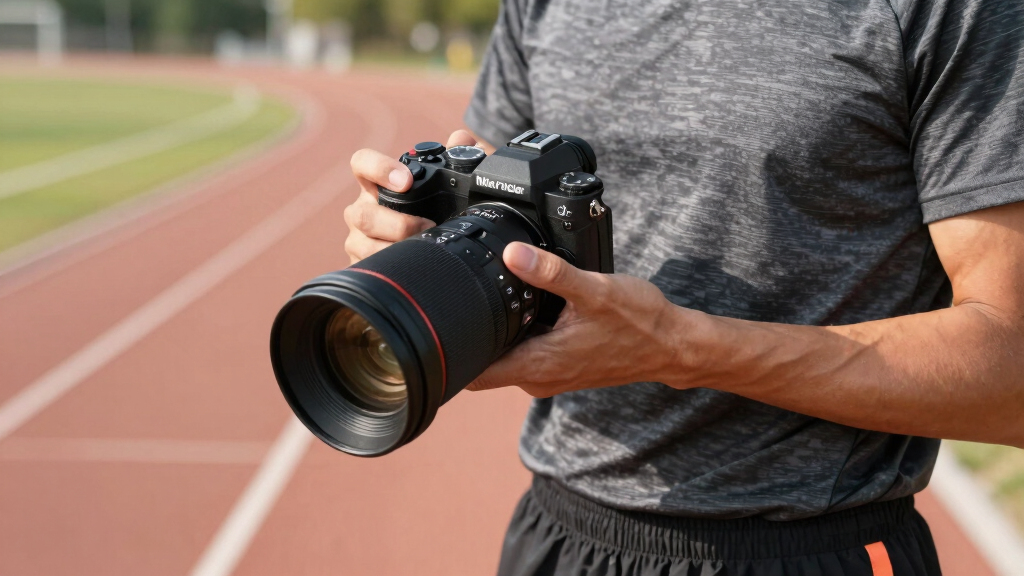

For sports creators, capturing fast-paced moments with clarity and precision is essential. The Canon EOS R7 stands out as the overall best for its advanced autofocus and high-resolution sensor, ideal for action-packed shoots. The Sony Alpha 7 IV offers versatile full-frame performance suitable for professional sports videography, while the Canon EOS R10 provides excellent value with solid 4K video and a compact design. As you weigh options, consider tradeoffs like sensor size, autofocus speed, and feature set. Continue reading for a detailed comparison that helps you find the perfect match for your sports content creation needs.

Get sports gear delivered free with Prime
- Fast, free delivery on millions of items
- Prime Video, Amazon Music and more included
- Member-only deals all year
Key Takeaways
- Sensor size and autofocus speed are the primary factors impacting sports photography and video quality.
- Mirrorless cameras with good in-body stabilization and fast burst rates excel in capturing fast motion.
- Price ranges vary widely; high-end models offer better low-light and autofocus performance, but mid-range options often provide great value.
- Video capabilities, including 4K and HDMI output, are critical for content creators focused on sports videography.
- Compact models are appealing for mobility but may lack some advanced features found in full-frame options.


More Details on Our Top Picks
Canon EOS R10 Content Creator Kit, Mirrorless Vlogging Camera with RF-S18-45mm F4.5-6.3 is STM Lens, Tripod and Stereo Microphone, 24.2 Megapixel CMOS (APS-C) Sensor, 4K Video, Black
This kit shines for its combination of compact size, high-quality 24.2 MP APS-C sensor, and excellent autofocus with Dual Pixel CMOS AF technology, making it a standout compared to the Canon EOS R50, which offers similar resolution but less advanced autofocus. Its high-speed 15 fps continuous shooting and 4K video capabilities deliver crisp, fast-paced content ideal for sports and vlogging. The included stereo microphone and tripod grip add value for creators on the move. However, the lack of in-body stabilization means shaky footage during active shots can be a concern, especially compared to models like the Sony ZV-E10 II with built-in stabilization. Its user-friendly interface and broad lens compatibility make it a top pick for aspiring creators, though heavier than some mirrorless options.
Pros:- High-resolution 24.2 MP APS-C sensor for detailed images
- Fast 15 fps continuous shooting ideal for sports
- Excellent autofocus with eye, animal, and vehicle detection
- Includes essential accessories like stereo microphone and tripod grip
Cons:- No in-body stabilization, which can lead to shaky videos during movement
- Limited 30-minute recording cap per clip
Best for: Content creators who need a lightweight, flexible camera for both photography and high-quality video, especially for sports and vlogging.
Not ideal for: Vloggers or sports creators seeking in-body stabilization or advanced image stabilization for ultra-smooth footage.
- Sensor Type:CMOS APS-C
- Effective Still Resolution:24.2 MP
- Video Resolution:4K
- Continuous Shooting:15 fps
- Lens Compatibility:RF-S, RF, EF, EF-S
- Display:3-inch LCD
Bottom line: A well-rounded choice for creators needing versatile photo and video capabilities in a portable package.
Panasonic LUMIX G100 4k Mirrorless Camera for Photo and Video, Built-in Microphone with Tracking, Micro Four Thirds Interchangeable Lens System, 12-32mm Lens, 5-Axis Hybrid I.S., DC-G100DKK (Black)
Compared with the Canon EOS R50, the LUMIX G100 offers a Micro Four Thirds sensor that excels in low-light and video performance, with 20.3 MP resolution and a 3-inch vari-angle touchscreen for flexible framing. Its 5-axis hybrid image stabilization helps produce steadier footage without in-body stabilization, making it more suitable for handheld vlogging. The included 12-32mm lens covers wide-angle shots perfect for travel and indoor recording, and the camera’s ability to use all LUMIX lenses adds creative flexibility. Its interface is friendly for beginners, especially with automatic modes and a simple setup, but it lacks some advanced autofocus features found in the Canon EOS R10. The built-in microphone with tracking audio is a plus for crisp sound, ideal for those starting out in content creation.
Pros:- Excellent 4K video with active stabilization
- Articulating touchscreen for easy framing from any angle
- Compatible with all Micro Four Thirds lenses for versatility
- Built-in tracking audio microphone for clear sound
Cons:- Limited autofocus features compared to high-end models
- No in-body stabilization, relying on lens stabilization
Best for: Beginners and casual content creators looking for an affordable, easy-to-use camera with good video features and stabilization.
Not ideal for: Advanced videographers or sports creators who need in-body stabilization and more professional autofocus capabilities.
- Sensor Type:CMOS Micro Four Thirds
- Effective Still Resolution:20.3 MP
- Video Resolution:4K
- Display:3-inch vari-angle LCD
- Image Stabilization:5-Axis Hybrid I.S.
- Lens System:Micro Four Thirds
Bottom line: An ideal entry-level option for content creators prioritizing ease of use and stabilization for casual filming.
Z10 4K Action Camera, 128GB Wearable Sports Camera with Waterproof Case, Magnetic Clip, and Quick-Mount Accessories, Small Body Cam for Cycling, Diving, Travel (No WiFi No Bluetooth)
Compared to the Canon EOS R50, the Z10 is a rugged, ultra-light action camera designed for extreme conditions like diving and cycling, with 4K video at 60fps and 30 MP stills. Its waterproof case allows dives up to 30 meters, making it perfect for underwater adventures, similar to the Icefox Action Camera, but with a more compact form factor. The built-in electronic image stabilization ensures steady footage over rough terrain, and the magnetic and clip mounts provide versatile positioning options. Its absence of WiFi and Bluetooth limits quick sharing, unlike models like the Icefox, which supports app-based editing. The limited control options and reliance on manual settings mean it’s best for users comfortable with straightforward operation rather than advanced customization. Ideal for outdoor enthusiasts needing reliable, standalone video capture without connectivity distractions.
Pros:- Rugged waterproof design for diving and outdoor use
- High-quality 4K60FPS video and 30 MP photos
- Lightweight and compact for wearable applications
- Versatile mounts for helmets, bikes, and gear
Cons:- No WiFi or Bluetooth connectivity for quick sharing
- Limited manual controls and app features
Best for: Outdoor and sports enthusiasts needing durable, waterproof footage without reliance on WiFi or app connectivity.
Not ideal for: Vloggers or content creators requiring instant sharing and advanced editing via mobile apps.
- Sensor Type:CMOS
- Effective Still Resolution:30 MP
- Video Resolution:4K 60FPS
- Water Resistance Level:Waterproof up to 30m
- Form Factor:Compact
- Connectivity:No WiFi/BT
Bottom line: A tough, reliable action camera best suited for high-adventure activities without connectivity needs.
icefox Action Camera 4K 60FPS 20MP, Underwater with EIS,5XZoom,App Support Video&Photo Editing,Waterproof Camera WiFi Remote Control for Cycling, Swimming, and Diving
Compared with the Canon EOS R50, the icefox Action Camera offers a compact, lightweight design with 20 MP photos and 4K60FPS video, optimized for outdoor sports like cycling and swimming. Its built-in electronic image stabilization and 5x optical zoom help produce stable, detailed footage in dynamic environments. The waterproof case extends underwater use up to 30 meters, similar to the Losfom Z10, but with better zoom capabilities. The app support for video and photo editing, along with WiFi remote control, makes it user-friendly for quick sharing and adjustments, unlike the Z10 which lacks WiFi. The limited internal controls and basic menu system mean it’s suited for casual users rather than professional editors. Excellent for those who want good quality footage with easy post-processing options on the go.
Pros:- 4K60FPS video with electronic stabilization
- 5x optical zoom for versatile framing
- Waterproof with included case for underwater use
- Supports app-based editing and remote control
Cons:- Limited internal control options compared to higher-end cameras
- Battery life around 2.5 hours, less for extended shoots
Best for: Outdoor sports enthusiasts and casual content creators looking for a lightweight, easy-to-edit waterproof action camera.
Not ideal for: Professional videographers or users needing advanced controls and connectivity for quick sharing.
- Sensor Type:CMOS
- Effective Still Resolution:20 MP
- Video Resolution:4K 60FPS
- Water Resistance Level:IP68, 30m
- Zoom:5x optical
- Connectivity:WiFi
Bottom line: A solid mid-range action camera that balances quality, ease of use, and waterproof performance for active users.
Canon EOS R50 Vlogging Creator Kit, Hybrid Mirrorless Camera with RF-S10-18mm F4.5-6.3 IS STM Lens and Tripod Grip, Wide-angle Lens, 24.2 MP CMOS (APS-C) Sensor, Vlogging Camera, Black
Compared to the Canon EOS R10, the EOS R50 offers a more compact and beginner-friendly experience with a 24.2 MP APS-C sensor and a versatile wide-angle RF-S10-18mm lens. Its autofocus with Dual Pixel CMOS AF II tracks subjects reliably, making it ideal for vloggers and casual shooters. The 6K oversampled 4K video and high-speed 15 fps shooting provide excellent quality for dynamic content, similar to the Canon EOS R10 but with fewer professional features. The included tripod grip and wireless remote add convenience, though it lacks some advanced stabilization features found in higher-tier models. Its simple interface and effective auto scene modes make it perfect for new creators, though it might fall short for those needing professional-grade controls.
Pros:- Compact and lightweight for portability
- Excellent 24.2 MP APS-C sensor for detailed images
- High-quality 4K oversampled video and fast burst shooting
- Includes tripod grip and wireless remote for convenience
Cons:- Lacks in-body stabilization, relying on lens stabilization
- Limited manual control options for advanced users
Best for: Vloggers and beginner content creators who want a lightweight, easy-to-use camera with solid video quality and stabilization.
Not ideal for: Professional filmmakers or sports creators requiring in-body stabilization and advanced autofocus features.
- Sensor Type:APS-C CMOS
- Effective Still Resolution:24.2 MP
- Video Resolution:4K
- Autofocus:Dual Pixel CMOS AF II
- Display:3-inch LCD
- Connectivity:Wi-Fi, Bluetooth
Bottom line: An excellent choice for vlogging and casual content creation with great image quality and portability.
Sony ZV-E10 II Mirrorless Vlogging Camera Kit with 16–50 mm OSS Lens – 26 MP APS-C Sensor | 64GB Memory Card, Filter Kit, Photo Software, Bag, 2 x NP-FZ100 Battery and More
The Sony ZV-E10 II stands out for its combination of high-resolution 26 MP APS-C sensor and advanced autofocus, making it ideal for vloggers and social media creators. Compared with the Canon EOS R100, it offers superior autofocus tracking and real-time eye AF, which are critical for dynamic shooting. Its compact, lightweight design paired with seamless live streaming and versatile creative modes makes it a go-to for solo creators who need a portable yet powerful tool. However, it does lack in-body stabilization for heavier lenses, and some may find the included accessories less useful if they already own professional gear. Best for creators seeking a versatile, ready-to-shoot kit that balances quality and portability.
Pros:- 26 MP high-resolution APS-C sensor delivers sharp, detailed images and 4K video.
- Real-Time Eye AF and subject tracking keep subjects sharp in fast-moving scenes.
- Compact, lightweight design ideal for mobile shooting and vlogging.
Cons:- Lacks in-body stabilization, which can be limiting for handheld video in dynamic environments.
- Battery life is moderate; frequent recharging or extra batteries are recommended.
Best for: Travel vloggers and social media influencers needing a compact, feature-rich camera for on-the-go content.
Not ideal for: Professional sports photographers or wildlife shooters requiring heavy-duty stabilization and fast burst modes.
- Sensor Type:APS-C CMOS
- Megapixels:26 MP
- Video Resolution:2160p (4K) at 60 fps
- Autofocus:Real-Time Eye AF, subject tracking
- Connectivity:Wi-Fi, Bluetooth, USB-C
- Display:3-inch vari-angle LCD
Bottom line: Perfect for content creators who need a portable, all-in-one kit with excellent autofocus and video capabilities.
Canon EOS RP Full-Frame Mirrorless Interchangeable Lens Camera + RF24-105mm Lens F4-7.1 is STM Lens Kit- Compact and Lightweight for Traveling and Vlogging, Black (3380C132)
The Canon EOS RP offers a full-frame 26.2 MP sensor in a surprisingly compact body, making it a strong choice for photographers and vloggers who prioritize image quality without bulk. Compared to the Sony ZV-E10 II, it excels in low-light performance and provides a broader depth of field, which benefits cinematic-style content. Its RF24-105mm lens provides versatile zoom and macro capabilities, though some users note that the edge sharpness can be soft at wider apertures. The camera’s user-friendly interface and excellent color science make it accessible for beginners, but it lacks in-body stabilization, which may require additional gear for smooth video. Ideal for travel enthusiasts and hobbyists wanting a lightweight full-frame system with flexible lens options.
Pros:- Full-frame 26.2 MP sensor delivers superior image quality and low-light performance.
- Versatile RF24-105mm lens with macro and zoom capabilities.
- Compact, lightweight design ideal for travel and daily vlogging.
Cons:- Edge softness at wider apertures can impact image sharpness, especially at the edges.
- No in-body stabilization, so handheld videos may require stabilization accessories.
Best for: Travel and lifestyle vloggers who want high-quality images in a portable package and are comfortable with basic stabilization accessories.
Not ideal for: Fast-paced sports or wildlife shooters needing quick autofocus and in-body stabilization for unpredictable motion.
- Sensor Size:Full Frame (35mm)
- Megapixels:26.2 MP
- Video Resolution:2160p (4K) at 24 fps
- Lens:RF24-105mm F4-7.1 IS STM
- Weight:Approx 1 Pound
- Connectivity:Wi-Fi, Bluetooth
Bottom line: A great choice for travel and casual content creators seeking high-quality full-frame images without sacrificing portability.
Canon EOS Rebel T7 DSLR Camera Double Zoom Lens Kit with EF-S 18-55mm and EF 75-300mm Lenses, 24.1 Megapixel CMOS (APS-C) Sensor, Full HD Videos, Wi-Fi, Beginner Photographers, Digital Camera, Black
The Canon EOS Rebel T7 provides a familiar DSLR experience with a 24.1 MP APS-C sensor and dual zoom lenses, making it an excellent starting point for new photographers venturing into sports or action photography. Compared with mirrorless options like the Canon EOS R100, it offers an optical viewfinder, which many traditionalists prefer for real-time framing. Its user-friendly interface and built-in Wi-Fi facilitate easy sharing, though it’s bulkier than mirrorless counterparts and less suited for fast-paced sports due to slower burst speeds. The autofocus system is reliable for static and slow-moving subjects, but it struggles with rapid motion. Ideal for beginners who want a versatile, budget-friendly camera to learn the basics of photography and videography.
Pros:- Dual zoom lenses cover wide-angle and telephoto needs.
- 24.1 MP APS-C sensor offers sharp images and 1080p video.
- Built-in Wi-Fi and NFC for easy sharing and remote control.
Cons:- Slower burst speeds (up to 3 fps) limit action photography.
- Bulkier than mirrorless models, less portable for active use.
Best for: Entry-level hobbyists interested in learning sports photography and casual videography.
Not ideal for: Advanced sports or wildlife photographers needing fast autofocus and high-speed continuous shooting.
- Sensor Type:APS-C CMOS
- Megapixels:24.1 MP
- Video Resolution:Full HD 1080p
- Autofocus:9-point AF system
- Shooting Speed:Up to 3 fps
- Connectivity:Wi-Fi, NFC
Bottom line: A solid, beginner-friendly DSLR kit for those starting out in sports or action photography with a focus on affordability and ease of use.
Canon EOS R100 Mirrorless Camera, RF Mount, 24.1 MP, DIGIC 8 Image Processor, Continuous Shooting, Eye Detection AF, Full HD Video, 4K, Small, Lightweight, Wi-Fi, Bluetooth, Content Creation
The Canon EOS R100 excels as an approachable, lightweight mirrorless camera with a 24.1 MP APS-C sensor and fast autofocus, making it ideal for casual sports and everyday content. Compared with the Sony ZV-E10 II, it offers a slightly simpler interface and Canon’s renowned color science, appealing to those who prioritize ease of use and consistent image quality. Its compact size and effective Eye Detection AF make it suitable for handheld shooting during action or sports events, but it may lack the high burst speeds of more advanced models like the Canon EOS R7. Its limited ergonomic grip and modest battery life are tradeoffs for portability. Best suited for hobbyists and vloggers wanting a small, reliable camera for casual sports content.
Pros:- Lightweight, pocketable form factor enhances portability.
- Effective Eye Detection AF for sharp portraits and action shots.
- 4K video recording with Wi-Fi and Bluetooth connectivity.
Cons:- Lower burst speeds (up to 6 fps) may miss fast sports moments.
- Limited grip and battery life can hinder extended, active shoots.
Best for: Casual sports enthusiasts and vloggers seeking a lightweight, easy-to-operate camera for on-the-go filming.
Not ideal for: Pro sports photographers or wildlife shooters requiring ultra-fast autofocus and extended battery performance.
- Sensor Size:APS-C
- Megapixels:24.1 MP
- Video Resolution:4K UHD
- Autofocus:Eye Detection AF
- Continuous Shooting:Up to 6 fps
- Connectivity:Wi-Fi, Bluetooth
Bottom line: An excellent choice for content creators who need a compact, user-friendly camera for casual sports and lifestyle videos.
Canon EOS R7 Mirrorless Camera (Body Only), Hybrid Camera, 32.5 Megapixel (APS-C) CMOS Sensor, 4K Video, for Sports, Action, Content Creators, Vlogging Camera, Black
The Canon EOS R7 is tailored for fast-paced sports and action shooters, featuring a 32.5 MP APS-C sensor and high-speed autofocus with up to 651 AF zones. Unlike the Sony ZV-E10 II, it offers a robust 15 fps mechanical shutter and advanced in-body stabilization, ensuring crisp, shake-free images even during rapid movement. Its versatile 4K video capabilities and deep autofocus tracking make it an ideal hybrid for both stills and video. However, its size and weight are slightly more substantial, which could be less convenient for extended handheld use. Its high frame rate and focus coverage are key tradeoffs that make it stand out in action scenarios. Designed specifically for sports and action enthusiasts who demand speed and precision.
Pros:- 32.5 MP sensor provides detailed, high-resolution images.
- Fast 15 fps mechanical shutter for capturing rapid action.
- Excellent in-body 5-axis stabilizer enhances video and stills stability.
Cons:- Heavier and slightly bulkier than smaller mirrorless models.
- Battery life, while improved, still requires extra batteries for extended shoots.
Best for: Serious amateur and semi-professional sports photographers and videographers covering fast-moving events.
Not ideal for: Casual hobbyists or those seeking the lightest, most portable camera for casual content creation.
- Sensor Type:APS-C CMOS
- Megapixels:32.5 MP
- Video Resolution:4K UHD
- Frame Rate:15 fps (mechanical shutter)
- Autofocus:Dual Pixel CMOS AF with 651 zones
- Stabilization:In-body 5-axis IBIS
Bottom line: An outstanding choice for action and sports photographers needing speed, focus coverage, and stabilization in a compact package.
Sony Alpha 7 III Full Frame Mirrorless Camera Kit with 28-70mm Lens | 24.2MP Digital Camera for Professional Photography and 4K Video (ILCE7M3K/B) with Bag, 64GB Card, Memory Card Reader and More
This Sony Alpha 7 III stands out for its impressive blend of image quality, autofocus speed, and stabilization, making it a reliable choice for sports creators who need versatility. Compared to the Sony Alpha 7 IV, it offers excellent performance at a lower price point, though it lacks some of the newer high-resolution and video features. This model’s 24.2MP full-frame sensor and hybrid AF system with 693 points ensure sharp shots of fast-moving subjects, while the 5-axis in-body stabilization keeps footage smooth even in dynamic environments. However, it’s bulkier than more compact options like the Canon EOS R10, which might be a drawback for handheld shooting during long events. Tradeoffs include slightly older tech versus affordability and proven reliability. This pick makes the most sense for sports creators who prioritize high-quality stills and 4K video without needing the latest bells and whistles.
Pros:- Exceptional autofocus with 693 phase-detection points for fast tracking
- In-body 5-axis stabilization reduces shake during handheld shooting
- Robust battery life supporting extended sessions
Cons:- Relatively heavy at 4.38 pounds, less portable for all-day use
- Limited 4K recording options without higher bit-rate settings compared to newer models
Best for: Serious sports creators needing a dependable full-frame setup for both high-quality photos and cinematic videos.
Not ideal for: Vloggers or casual content creators who prefer lightweight, simplified gear for quick setups.
- Sensor Type:BSI CMOS
- Resolution:24.2 MP
- Video Resolution:4K
- Autofocus System:Hybrid with 693 Points
- Image Stabilization:5-Axis Sensor-shift
- Weight:4.38 Pounds
Bottom line: Ideal for experienced sports creators seeking a reliable, full-featured camera that balances photo quality and video stability.
Sony Alpha 7 IV Full-Frame Mirrorless Interchangeable Lens Camera with 28-70mm Zoom Lens Kit
This Sony Alpha 7 IV offers a significant step up in resolution with 33MP, combined with 4K 60p 10-bit video capabilities, making it ideal for creators who want cinematic quality and high detail. Compared with the Alpha 7 III, it introduces advanced autofocus features like real-time Eye AF and focus breathing compensation, ensuring sharpness during fast sports action. Its larger sensor and newer BIONZ XR engine enable richer color and better low-light performance, though it comes at a higher price and weight—around 955 grams—less suited to extended handheld use without support. The camera’s video capabilities, including 4K 60p and 10-bit recording, surpass the older model for high-end content production. Tradeoffs involve increased size and cost, which may be less suitable for shooters prioritizing portability or budget constraints. This is a strong choice for sports creators who demand professional-grade resolution and cinematic flexibility.
Pros:- High-resolution 33MP sensor for detailed images and cropping flexibility
- Up to 4K 60p 10-bit recording for cinematic video quality
- Enhanced autofocus with real-time Eye AF and focus breathing compensation
Cons:- Heavier and bulkier at nearly 1 kilogram, less portable for on-the-go shooting
- Higher price point, which may be a barrier for hobbyists or casual users
Best for: Advanced sports content creators combining high-resolution photography with professional video workflows.
Not ideal for: Beginners or those seeking lightweight, budget-friendly options for casual sports filming.
- Sensor Type:Full-Frame Exmor R CMOS
- Resolution:33 MP
- Video Resolution:4K 60p 10-bit
- Autofocus System:Real-time Eye AF, Hybrid
- Maximum Shutter Speed:1/8000 sec
- Weight:955 grams
Bottom line: Best suited for professional sports creators who need top-tier image and video quality in a durable full-frame body.

How We Picked
The cameras included in this list were selected based on their performance in fast-paced sports environments, usability during high-movement shoots, and durability for outdoor use. We prioritized models with high autofocus speed, reliable tracking, and solid image stabilization. Additional factors such as battery life, size, and overall value also influenced the rankings. Since sports creators often shoot both photos and videos, versatility and video features played a key role in the evaluation process. Our goal was to identify cameras that balance professional quality with user-friendly features suitable for active shooting scenarios.Factors to Consider When Choosing Top Rated Mirrorless Camera For Sports Creators
Choosing the right mirrorless camera for sports creation involves considering several key factors beyond raw specs. Understanding these will help ensure you select a model that performs reliably in dynamic settings while fitting your workflow and budget. The right camera should enhance your ability to capture fast-moving subjects without compromise on quality or usability.Sensor Size and Image Quality
Sensor size impacts both image quality and autofocus performance. Larger sensors, like full-frame models, excel in low-light conditions and provide a shallower depth of field, which can be advantageous for sports videography. However, APS-C and Micro Four Thirds sensors often offer lighter, more affordable options with decent image quality. Consider your typical shooting environment and whether you prioritize resolution or portability when evaluating sensor size.
Autofocus Speed and Tracking
Fast, accurate autofocus with subject tracking is vital for capturing quick-moving athletes and sports action. Look for cameras with advanced eye and subject detection, especially those that excel in continuous autofocus modes. This reduces missed shots and blurry footage, making your content sharper and more professional. Some models also incorporate real-time tracking, which is a game-changer during high-speed sequences.
Video Capabilities
For sports creators focusing on video, 4K recording at high bitrates with good stabilization is essential. Check whether the camera offers HDMI output, microphone inputs, and the ability to shoot at higher frame rates (e.g., 60fps or more). These features enable smoother footage and better editing options. Keep in mind that some models may crop the image at higher frame rates, which can limit your framing options during fast action.
Build and Durability
Sports shooting often involves outdoor or rugged environments, so durability and weather sealing can be critical. Compact, lightweight bodies increase mobility but might lack extensive weatherproofing. Consider whether the camera’s build quality matches your shooting conditions, especially if you plan to shoot in rain, dust, or extreme temperatures. A sturdy, weather-resistant body can save you from unexpected damage or interruptions.
Battery Life and Accessories
High burst shooting and extended video recording drain batteries quickly. Look for models with longer battery life or options for quick-swappable batteries. Compatibility with accessories like external microphones, gimbals, and external monitors can also enhance your shooting capability. Think about your typical shooting duration and whether additional power sources are necessary for uninterrupted coverage.
Frequently Asked Questions
How important is sensor size for sports videography?
Sensor size directly influences image quality, low-light performance, and autofocus accuracy. Full-frame sensors tend to perform better in dim conditions and provide a more cinematic look, which is beneficial for high-quality sports videos. However, they are often larger and more expensive. APS-C sensors strike a good balance, offering decent low-light performance and compactness, making them popular among sports creators who need mobility and affordability.
Should I prioritize autofocus over image stabilization?
Both features are essential, but autofocus speed and accuracy usually have a greater impact on capturing fast-moving subjects effectively. Reliable autofocus with tracking ensures that your subjects remain sharp, even in rapidly changing scenes. Image stabilization, while helpful for handheld shooting, cannot compensate for poor focus, so prioritizing autofocus will generally lead to better results in sports scenarios.
Is 4K recording necessary for sports content?
For most sports creators, 4K offers sharper footage and greater flexibility in post-production, such as cropping or stabilizing shots. It’s becoming a standard feature in modern cameras, and many viewers expect high-resolution videos. However, 4K files are larger and demand more storage and processing power. If your primary focus is quick clips or social media snippets, high-quality 1080p might suffice, but for professional-level sports videography, 4K is generally recommended.
How do weather sealing and durability affect my choice?
If you frequently shoot outdoors or in unpredictable conditions, a weather-sealed, rugged camera can prevent damage caused by moisture, dust, or extreme temperatures. While these models tend to be heavier and more expensive, they offer peace of mind and uninterrupted shooting in challenging environments. For indoor or controlled settings, lighter, less sealed models may be adequate and more portable.
What should I consider regarding lens compatibility for sports cameras?
Lens selection is critical for sports content, where fast autofocus, wide apertures, and zoom capabilities matter. Choose a camera with a versatile lens ecosystem, preferably with telephoto or zoom lenses suited for capturing distant action. Interchangeable lens systems offer flexibility, but ensure the lenses are compatible and match your intended shooting style. Investing in quality lenses can significantly improve your footage’ clarity and dynamic range.
Conclusion
For those seeking the best overall performance, the Canon EOS R7 offers a winning combination of autofocus speed, high-resolution sensor, and durability, making it ideal for serious sports creators. Budget-conscious shooters or those new to sports videography will find the Canon EOS R10 provides excellent value without sacrificing key features. Professionals aiming for cinematic quality might prefer the Sony Alpha 7 IV with its full-frame sensor and advanced video options. Beginners or casual content creators should consider lighter, simpler models with good autofocus and stabilization, while outdoor shooters need weather-sealed bodies. Ultimately, your choice depends on your shooting environment, budget, and specific content goals.Fall Picks
fall essentials
As an affiliate, we earn on qualifying purchases.