Identity fusion explains how your passionate devotion makes you feel deeply connected to a group or fan community. When fused, you see the group’s success or failure as your own, leading to unwavering loyalty and extraordinary sacrifices. This bond becomes part of your core self, driving you to defend and support your group even in tough times. If you want to understand how this intense commitment shapes behavior, keep exploring this fascinating psychological concept.
Key Takeaways
- Identity fusion creates a deep emotional bond where fans see their group as an extension of themselves, fueling intense devotion.
- Fans with fused identities prioritize the group’s success over personal interests, often making sacrifices for their fandom.
- This psychological state drives unwavering loyalty, motivating fans to defend, promote, and stand by their group during challenges.
- The sense of belonging in identity fusion leads to extraordinary acts of support, rooted in the feeling that the group is part of their identity.
- Understanding identity fusion explains why fan devotion can be so persistent, emotionally charged, and resistant to disconfirmation.
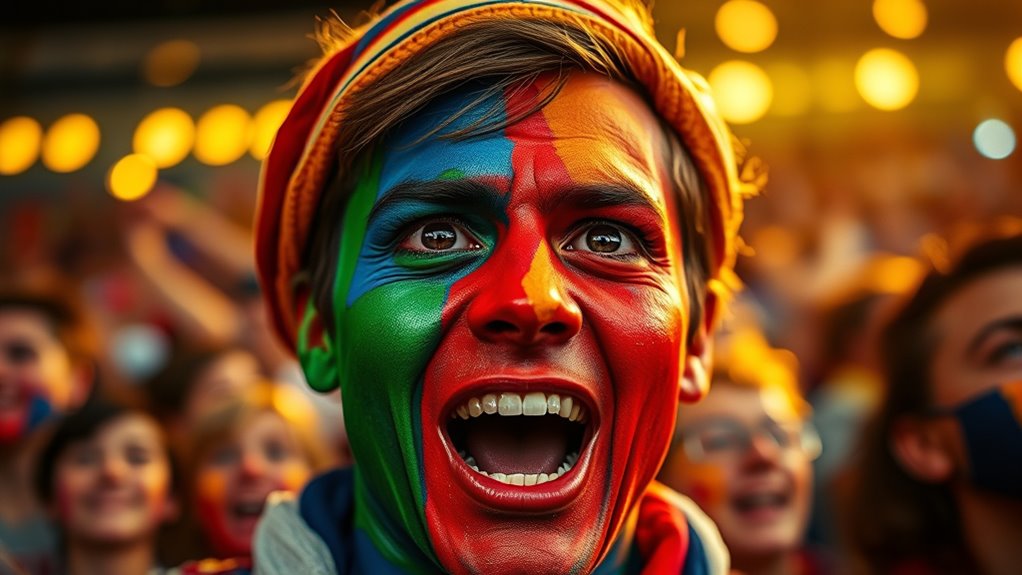
Have you ever felt so connected to a group or cause that it shaped your entire sense of self? That’s the feeling at the core of identity fusion, a psychological state where your personal bonds with a group become indistinguishable from your individual identity. When you experience this level of connection, your sense of loyalty isn’t just about supporting a team or cause; it becomes a fundamental part of who you are. Group loyalty in this context isn’t superficial or fleeting; it’s deep-rooted and emotionally charged, fueling actions that often go beyond typical allegiance. You don’t just cheer for your team from a distance—you feel compelled to stand with them in moments of adversity, even risking personal safety or comfort. That’s because your bond with the group feels as strong as a family tie, creating a sense of unity that’s hard to break.
This phenomenon isn’t about passive admiration. When you’re fused with a group, personal bonds transcend ordinary friendship or shared interests. They become a core part of your identity, making the group feel like an extension of yourself. This connection influences your thoughts, feelings, and behaviors, often leading you to prioritize the group’s goals above your own. You might find yourself defending the group fiercely or making sacrifices you wouldn’t consider otherwise. It’s as if your sense of self is intertwined with the group’s success or failure, amplifying your emotional investment.
The compelling power of identity fusion lies in how it transforms your motivations. Instead of acting out of self-interest alone, your actions are driven by a profound sense of belonging and purpose. This heightened sense of personal bonds fosters unwavering commitment, even in the face of criticism or conflict. Whether it’s a sports fan feeling a sense of pride that’s almost personal or a member of a social movement willing to risk everything, the feeling of being fused with a group makes your loyalty feel absolute. It’s not just a matter of liking or supporting; it’s a visceral, almost instinctual drive to protect, defend, and uphold the group’s identity.
Understanding the psychological mechanisms behind group loyalty can help explain why individuals sometimes act against their own interests for the sake of the collective.
In essence, when you’re fused with a group, your loyalty isn’t optional; it’s woven into your very identity. This powerful psychological state creates a sense of belonging so intense that it can motivate extraordinary acts of devotion. It’s a testament to how deeply personal bonds can shape who you are, aligning your sense of self with the collective identity of those you care about most.
Frequently Asked Questions
How Does Identity Fusion Differ From Mere Fandom Loyalty?
Identity fusion differs from mere fandom loyalty by creating a deep emotional bonding with a group, making you feel personally connected and committed. While loyalty may involve admiration from afar, identity fusion involves a strong sense of group affiliation where your identity and the group’s are intertwined. This intense emotional connection drives you to prioritize the group’s needs, even risking personal harm, unlike superficial loyalty that lacks such profound engagement.
Can Identity Fusion Lead to Negative Behaviors?
Absolutely, identity fusion can fuel fan fanaticism and foster group conformity, which sometimes leads to negative behaviors. When your sense of self becomes deeply intertwined with a group or fandom, you’re more likely to defend it fiercely, even when it means crossing ethical lines. This intense devotion can push you toward actions like harassment, vandalism, or violence—behaviors driven by a desire to protect your fused identity at all costs.
What Triggers Identity Fusion in Fans?
You’re triggered into identity fusion when you experience strong emotional bonding and feel a deep sense of community belonging with other fans. This connection often develops through shared experiences, intense admiration, or a sense of loyalty to a group or individual. When you identify closely with the group’s values and purpose, your sense of self becomes intertwined, fostering that powerful devotion and emotional attachment that characterizes identity fusion.
Is Identity Fusion Permanent or Can It Change Over Time?
Did you know that only about 25% of fans maintain their identity fusion over five years? It’s not permanent; it can change. You have emotional flexibility, which means your long-term stability of such devotion can fluctuate based on experiences, personal growth, or shifting interests. So, if you’re feeling less connected today, know that your sense of identity fusion isn’t fixed—you can evolve over time.
How Do Cultural Differences Influence Identity Fusion?
Cultural differences markedly influence your sense of identity fusion by shaping your social identity and norms. In some cultures, collective values and group loyalty strengthen your devotion and emotional bonds, making fusion more intense. Conversely, individualistic societies may foster weaker emotional ties. Your experiences and cultural background determine how deeply you feel connected to a group or cause, affecting the strength and stability of your identity fusion over time.
Conclusion
You now understand how identity fusion fuels your devotion, making you feel deeply connected to your favorite team or star. This intense bond can boost your happiness and sense of belonging, but it’s worth questioning whether it truly leads to long-term fulfillment. By recognizing this powerful psychology, you can enjoy your passions more mindfully. Embrace your devotion, but also stay aware of the balance needed to keep your identity healthy and genuine.